Danish
Axes
|
DESCRIPTION:
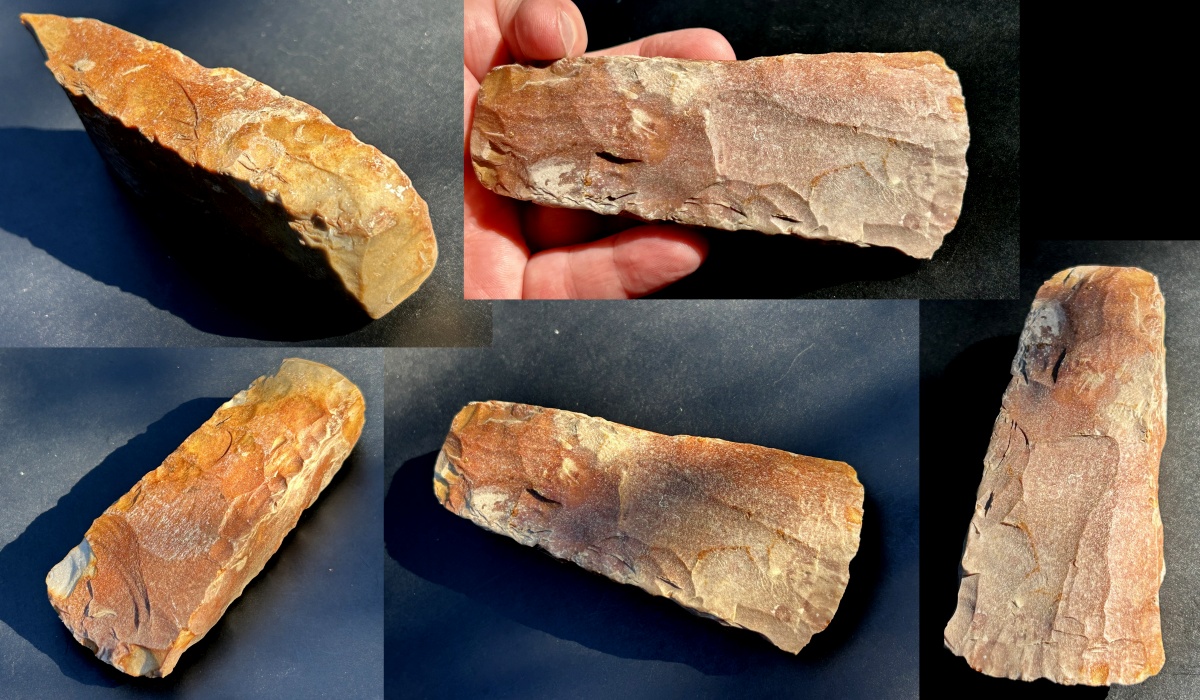
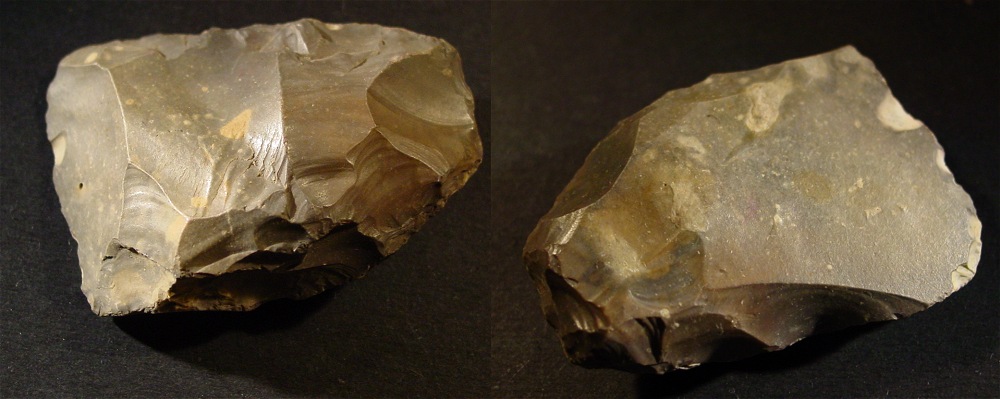
Danish Thick-Butted Flint Axe
Click on picture for greater detail.
 This
partially polished Danish Neolithic Thick-Butted flint axe is made of a light gray fine grain flint with
an attractive dark orange patina. All sides have a semi-polished finish
with deeper flake scars still visible. This artifact has a hollow-ground
cutting edge (concave). This artifact was utilized as
evident by the ancient
damaged to the cutting edge, occurring in the Neolithic period by the people who fashioned the
axe. This axe would have been used for land clearing of brush and
trees, farming, and chopping activities. Danish
Thick-Butted Flint Axes
were also used as social status symbols. This artifact
measures 126mm long, 50mm wide, and 25mm at its thickest point. The
workmanship is very fine. This artifacts dates from the Bell-beaker
Culture: 2,400 to 2,000 B.C. This artifact is a field find from an
old Danish collection discovered in Denmark
in the earlier part of the 20th century. This
partially polished Danish Neolithic Thick-Butted flint axe is made of a light gray fine grain flint with
an attractive dark orange patina. All sides have a semi-polished finish
with deeper flake scars still visible. This artifact has a hollow-ground
cutting edge (concave). This artifact was utilized as
evident by the ancient
damaged to the cutting edge, occurring in the Neolithic period by the people who fashioned the
axe. This axe would have been used for land clearing of brush and
trees, farming, and chopping activities. Danish
Thick-Butted Flint Axes
were also used as social status symbols. This artifact
measures 126mm long, 50mm wide, and 25mm at its thickest point. The
workmanship is very fine. This artifacts dates from the Bell-beaker
Culture: 2,400 to 2,000 B.C. This artifact is a field find from an
old Danish collection discovered in Denmark
in the earlier part of the 20th century.
PRICE: $236.00 ITEM
NO: DA-02
|
|
DESCRIPTION:
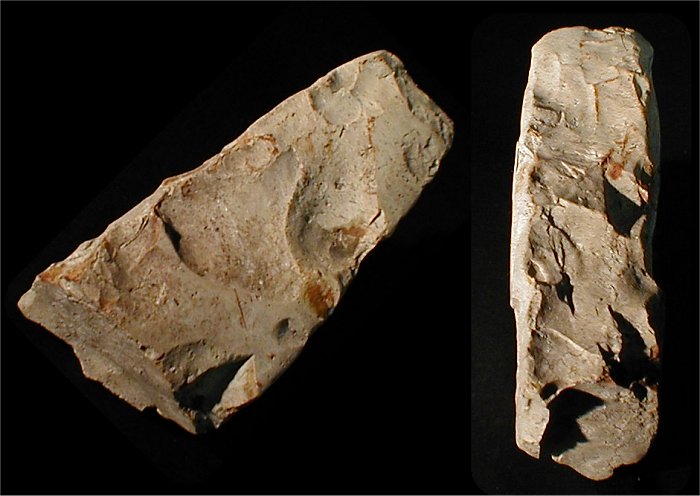
Danish Thin-Bladed Axe with a
Thin-Butt
Click on picture for greater detail.
 This
Danish Neolithic Thin-Bladed
flint axe is made of a light gray fine grain flint with
lighter colored mottling. The two sides have a nice polished finish
with deeper flake scars still visible. This artifact was heavily used as
evident by the ancient
damaged to the cutting edge, occurring in the Neolithic period by the people who fashioned the
axe. This axe would have been used for land clearing of brush and
trees, farming, and shaping timbers. Danish Thin-Bladed Axes
with polished surfaces reduced the chances that the axe get stuck in the
wood while chopping. This is the Thin-Butted type vs. the
Thick-Butted type of axe. This artifact
measures 108mm long, 52mm wide, and only 18mm at its thickest point.
This artifacts dates from the Funnel Beaker
Culture II
(Passage Grave Culture 3,400 to 2,800 B.C.). It was discovered in Denmark
in the earlier part of the 20th century. This
Danish Neolithic Thin-Bladed
flint axe is made of a light gray fine grain flint with
lighter colored mottling. The two sides have a nice polished finish
with deeper flake scars still visible. This artifact was heavily used as
evident by the ancient
damaged to the cutting edge, occurring in the Neolithic period by the people who fashioned the
axe. This axe would have been used for land clearing of brush and
trees, farming, and shaping timbers. Danish Thin-Bladed Axes
with polished surfaces reduced the chances that the axe get stuck in the
wood while chopping. This is the Thin-Butted type vs. the
Thick-Butted type of axe. This artifact
measures 108mm long, 52mm wide, and only 18mm at its thickest point.
This artifacts dates from the Funnel Beaker
Culture II
(Passage Grave Culture 3,400 to 2,800 B.C.). It was discovered in Denmark
in the earlier part of the 20th century.
PRICE: $172.00 ITEM
NO: DA-01
|
|
DESCRIPTION:
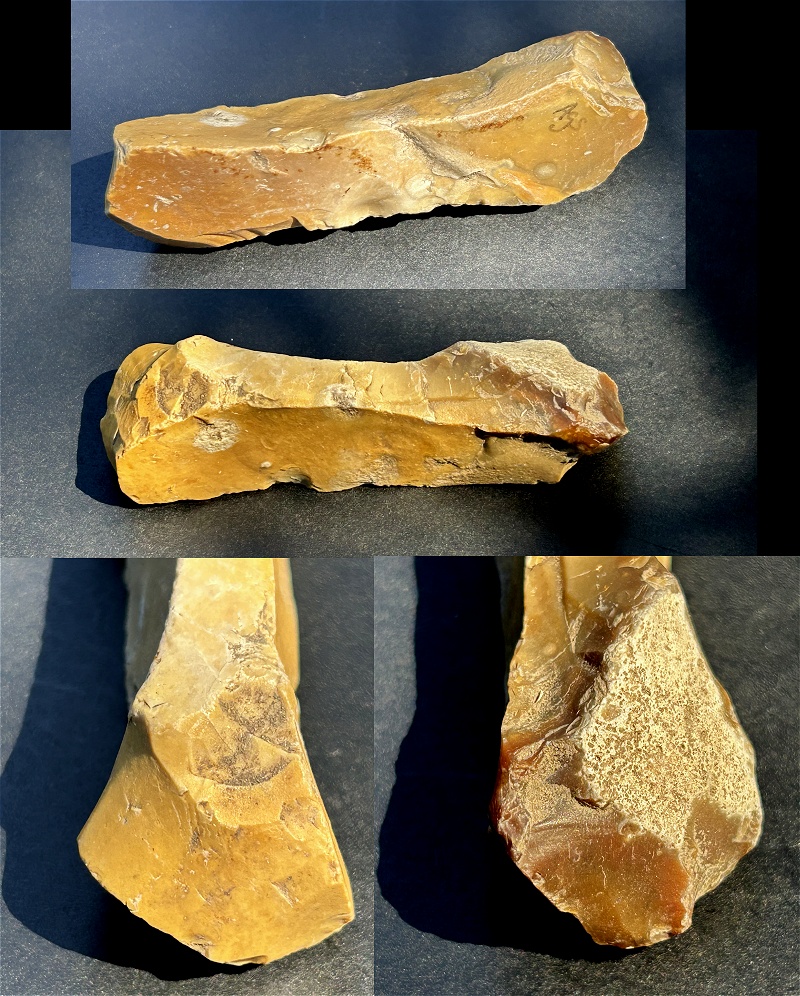
Danish Flint Axe
Click on picture for greater detail.
This
Danish Neolithic flint axe is made of a fine grain light gray flint with a very
heavy peach colored patina on one side and tope color
on the other side. All sides roughly chipped but smoothed out by water movement. The tip of this artifact is fairly blunt
with a 45 degree angle. It was probably used as a working axe, falling
trees and wood chopping. It
measures 123mm by 68mm and 25mm at its widest point. This
artifacts dates from the Funnel Beaker Culture II (Passage Grave Culture
3,400 to 2,800 B.C.) This artifact was found on the Island of Møn,
Denmark. The island has an area of 84 square miles (218 square km) and
lies in the Baltic Sea, in the early part of the
20th century.
chipped but smoothed out by water movement. The tip of this artifact is fairly blunt
with a 45 degree angle. It was probably used as a working axe, falling
trees and wood chopping. It
measures 123mm by 68mm and 25mm at its widest point. This
artifacts dates from the Funnel Beaker Culture II (Passage Grave Culture
3,400 to 2,800 B.C.) This artifact was found on the Island of Møn,
Denmark. The island has an area of 84 square miles (218 square km) and
lies in the Baltic Sea, in the early part of the
20th century.
PRICE: $164.00 ITEM NO: MO-8
|
|
DESCRIPTION:
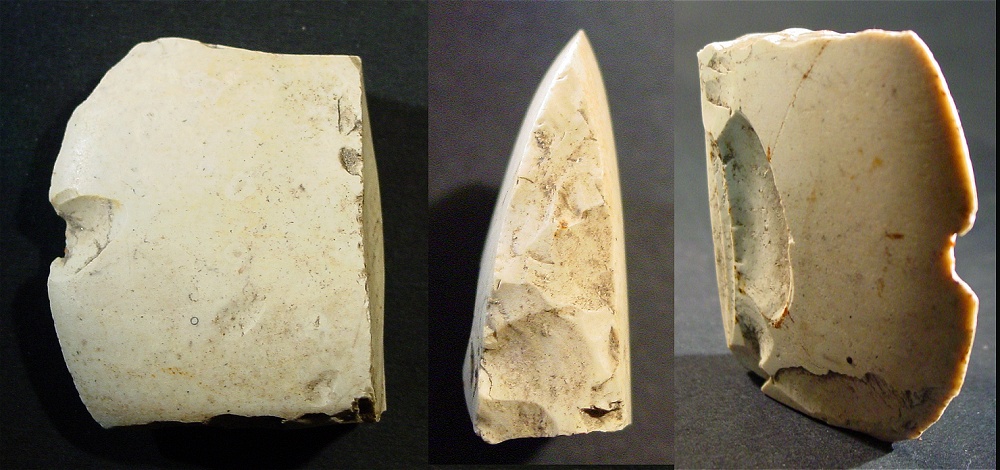
Danish Flint Disk Axe
Click on picture for greater detail.
 This
Danish Mesolithic Disk Flint
Axe is made of a cream colored fine grain flint with
some mottling. Danish Disc Axes (known in Danish as Skiveøkser) are the
oldest type of Danish axe. A disc axe was manufactured directly from a
heavy, wide flint flake. The blade is the broad, sharp cutting edge
formed by a single blow across the width of the flake (the tranchet
technique). The body of the axe are usually roughly flaked to taper
toward a narrow butt, leaving the flat ventral surface of the original
flake intact on one face. This axe would have been used for specialized
hunter-gatherer tasks such as splitting green wood, fashioning oars or
dugout canoes and butchery of marine and terrestrial animals. The Axe
would have been hafted onto a wooden shaft or slotted into a deer
antler. This artifact measures 57mm long, 38mm wide, and 10mm at its
thickest point. There is a bulb of percussion evident on
the proximal end
with some retouches on both side. The workmanship is fine. This
artifacts dates from the Maglemose Culture 9,000 to 6,800 B.C.
and is a from an old Danish collection. This
Danish Mesolithic Disk Flint
Axe is made of a cream colored fine grain flint with
some mottling. Danish Disc Axes (known in Danish as Skiveøkser) are the
oldest type of Danish axe. A disc axe was manufactured directly from a
heavy, wide flint flake. The blade is the broad, sharp cutting edge
formed by a single blow across the width of the flake (the tranchet
technique). The body of the axe are usually roughly flaked to taper
toward a narrow butt, leaving the flat ventral surface of the original
flake intact on one face. This axe would have been used for specialized
hunter-gatherer tasks such as splitting green wood, fashioning oars or
dugout canoes and butchery of marine and terrestrial animals. The Axe
would have been hafted onto a wooden shaft or slotted into a deer
antler. This artifact measures 57mm long, 38mm wide, and 10mm at its
thickest point. There is a bulb of percussion evident on
the proximal end
with some retouches on both side. The workmanship is fine. This
artifacts dates from the Maglemose Culture 9,000 to 6,800 B.C.
and is a from an old Danish collection.
PRICE: $75.00 ITEM
NO: DA-03 |
DESCRIPTION:
Danish Flint Disk Axe
Click on picture for greater detail.
 This
Danish Mesolithic Disk Flint
Axe is made of a colorful orange-brown colored fine grain flint with
some nice banding on the butt end. Danish Disc Axes (known in Danish as
Skiveøkser) are the oldest type of Danish axe. A disc axe was
manufactured directly from a heavy, wide flint flake. The blade is the
broad, sharp cutting edge formed by a single blow across the width of
the flake (the tranchet technique). The body of the axe are usually
roughly flaked to taper toward a narrow butt, leaving the flat ventral
surface of the original flake intact on one face. This axe would have
been used for specialized hunter-gatherer tasks such as splitting green
wood, fashioning oars or dugout canoes and butchery of marine and
terrestrial animals. The Axe would have been hafted onto a wooden shaft
or slotted into a deer antler. This artifact measures 84mm long, 40mm
wide, and 10mm at its thickest point. There are heavy flake scars on
both side of this artifact with some fine
retouches. This artifact was utilized as evident by the ancient damaged
to the cutting edge, occurring in the Mesolithic period by the people
who fashioned the axe. This artifact is quite old and dates from the
Maglemose Culture 9,000 to 6,800 B.C. This piece is a from an old
Danish collection. This
Danish Mesolithic Disk Flint
Axe is made of a colorful orange-brown colored fine grain flint with
some nice banding on the butt end. Danish Disc Axes (known in Danish as
Skiveøkser) are the oldest type of Danish axe. A disc axe was
manufactured directly from a heavy, wide flint flake. The blade is the
broad, sharp cutting edge formed by a single blow across the width of
the flake (the tranchet technique). The body of the axe are usually
roughly flaked to taper toward a narrow butt, leaving the flat ventral
surface of the original flake intact on one face. This axe would have
been used for specialized hunter-gatherer tasks such as splitting green
wood, fashioning oars or dugout canoes and butchery of marine and
terrestrial animals. The Axe would have been hafted onto a wooden shaft
or slotted into a deer antler. This artifact measures 84mm long, 40mm
wide, and 10mm at its thickest point. There are heavy flake scars on
both side of this artifact with some fine
retouches. This artifact was utilized as evident by the ancient damaged
to the cutting edge, occurring in the Mesolithic period by the people
who fashioned the axe. This artifact is quite old and dates from the
Maglemose Culture 9,000 to 6,800 B.C. This piece is a from an old
Danish collection.
PRICE: $95.00 ITEM
NO: DA-04 |
DESCRIPTION:
Danish Flint Core Axe
Click on picture for greater detail.
 This
Danish Mesolithic Core Flint
Axe is made of a light gray colored fine grain flint with
some oxidation spots and a nice old polished patina sheen. There is a
small amount of cortex visible on one side. Danish Core
axes were heavier and narrower that the older Disc Axes and were
shaped all over by multi-directional flaking. Core Axes (known in Danish as
Kærneøkser) are the
second oldest type of Danish axe. This axe would have been used by
hunter-gatherer primary as a heavy-duty woodworking tool such as felling
trees, clearing land, and wood fashioning. Since Core Axes were
chipped from flint rather than polished, they had a relatively rough,
durable edge and could be re-sharpened. They were tightly lashed into
wooden or antler hafts to absorb shock during heavy impacts. This artifact measures
111mm long, 41mm wide, and 38mm at its thickest point. Flake scars are
prevalent on all sides of this artifact. The workmanship is very fine.
This artifact dates from the Maglemose Culture 9,000 to 6,800 B.C.
to the earlier part of the Ertebölle
Culture
around 5,400 B.C. This artifact
is a from an old Danish collection. This
Danish Mesolithic Core Flint
Axe is made of a light gray colored fine grain flint with
some oxidation spots and a nice old polished patina sheen. There is a
small amount of cortex visible on one side. Danish Core
axes were heavier and narrower that the older Disc Axes and were
shaped all over by multi-directional flaking. Core Axes (known in Danish as
Kærneøkser) are the
second oldest type of Danish axe. This axe would have been used by
hunter-gatherer primary as a heavy-duty woodworking tool such as felling
trees, clearing land, and wood fashioning. Since Core Axes were
chipped from flint rather than polished, they had a relatively rough,
durable edge and could be re-sharpened. They were tightly lashed into
wooden or antler hafts to absorb shock during heavy impacts. This artifact measures
111mm long, 41mm wide, and 38mm at its thickest point. Flake scars are
prevalent on all sides of this artifact. The workmanship is very fine.
This artifact dates from the Maglemose Culture 9,000 to 6,800 B.C.
to the earlier part of the Ertebölle
Culture
around 5,400 B.C. This artifact
is a from an old Danish collection.
PRICE: $158.00 ITEM
NO: DA-05 |
DESCRIPTION:
Danish Flint Core Axe
Click on picture for greater detail.
 This
Danish Mesolithic Core Flint
Axe is made of a light gray colored fine grain flint with
some oxidation spots and a nice old polished patina sheen. Danish Core
axes were heavier and narrower that the older Disc Axes and were
shaped all over by multi-directional flaking. Core Axes (known in Danish as
Kærneøkser) are the
second oldest type of Danish axe. This axe would have been used by
hunter-gatherer primary as a heavy-duty woodworking tool such as felling
trees, clearing land, and wood fashioning. Since Core Axes were
chipped from flint rather than polished, they had a relatively rough,
durable edge and could be re-sharpened. They were tightly lashed into
wooden or antler hafts to absorb shock during heavy impacts. This artifact measures
112mm long, 37mm wide, and 21mm at its thickest point. Flake scars are
prevalent on all sides of this artifact. The workmanship is very fine.
This artifact dates from the Maglemose Culture 9,000 to 6,800 B.C.
to the earlier part of the Ertebölle
Culture
around 5,400 B.C. This artifact
is a from an old Danish collection. This
Danish Mesolithic Core Flint
Axe is made of a light gray colored fine grain flint with
some oxidation spots and a nice old polished patina sheen. Danish Core
axes were heavier and narrower that the older Disc Axes and were
shaped all over by multi-directional flaking. Core Axes (known in Danish as
Kærneøkser) are the
second oldest type of Danish axe. This axe would have been used by
hunter-gatherer primary as a heavy-duty woodworking tool such as felling
trees, clearing land, and wood fashioning. Since Core Axes were
chipped from flint rather than polished, they had a relatively rough,
durable edge and could be re-sharpened. They were tightly lashed into
wooden or antler hafts to absorb shock during heavy impacts. This artifact measures
112mm long, 37mm wide, and 21mm at its thickest point. Flake scars are
prevalent on all sides of this artifact. The workmanship is very fine.
This artifact dates from the Maglemose Culture 9,000 to 6,800 B.C.
to the earlier part of the Ertebölle
Culture
around 5,400 B.C. This artifact
is a from an old Danish collection.
PRICE: $148.00 ITEM
NO: DA-06 |
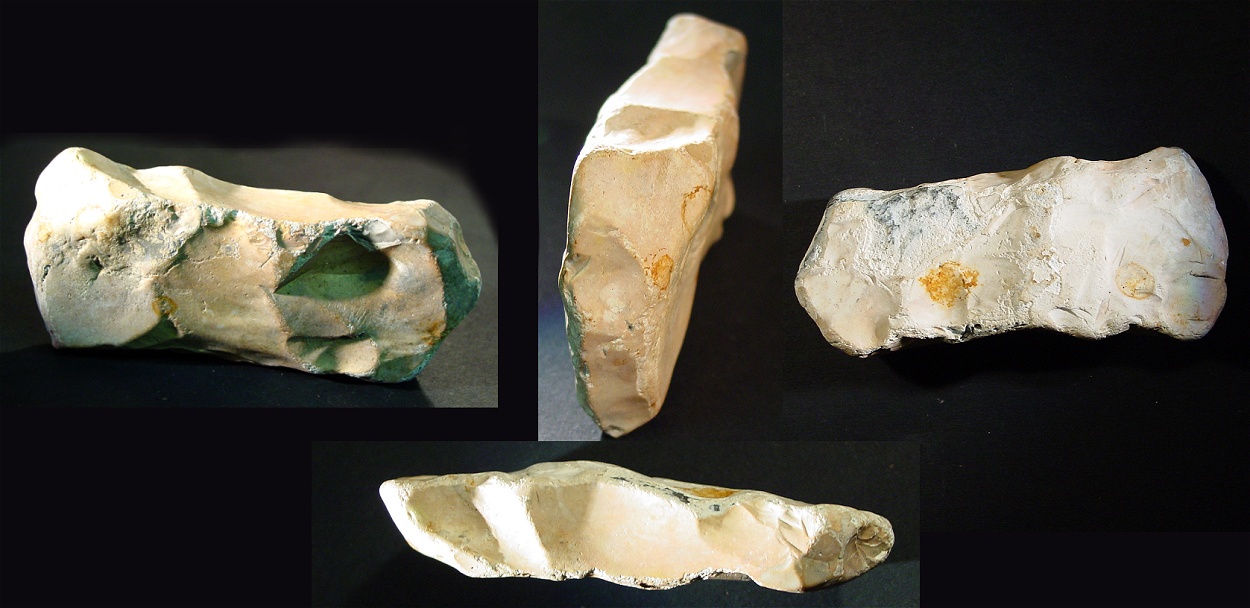
DESCRIPTION: Flint Core Chisel

Click on picture for greater detail.
This unusual and rare artifact is a Danish Flint Core Chisel made of a
orange colored flint with lighter colored intrusions.
This Core Chisel has been heavily modified to include a blunt
slanted chisel tip on the distal end. This Chisel show definite signs of utilization with wear
on both the tip and sides. This artifact was
fashioned from chipping away flakes to form a "core tool". There is some cortex visible on the
proximal end. This Danish Flint
Core Chisel measures 90mm long by
25mm wide and also 25mm at its thickest point. This stone artifact was found
at the archaeological site of Agernæs
(Ags), located on
the Northern tip of the island of Funen, Denmark. Agernæs was the site of an ancient
stone age hunting station associated with the Late Mesolithic
Ertebølle Culture and dated to 4,200 B.C. The site yielded 32
distinct hunted animal species, concentrating mainly on fur-bearing
animals. This artifact is from an old German collection.
PRICE: $
175.00 ITEM NO: AGS-02 |
|
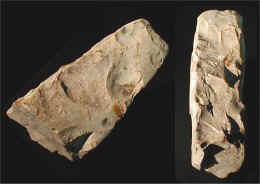
Click on picture for greater detail.
DESCRIPTION: Danish Thick Butted Axe
This Danish
Neolithic flint axe is made of a fine grain light gray ivory
flint. The cutting sides show areas of a high polished
finish. This type of axe was used for a variety of uses including
tree falling and wood chopping. This artifact has a damage point
which occurred in the Neolithic period by the people who fashioned this
artifact. It measures 98mm long, 29mm wide, and 42mm at its
tallest. This artifacts dates from the
Funnel Beaker Culture II (Passage Grave Culture 3,400 to 2,800 B.C.). It was found in Denmark
in the early part of the 20th century.
PRICE:
$80.00 ITEM NO: DM-A6 |
|
DESCRIPTION:
Danish Thick Butted Axe
Click on picture for greater detail.
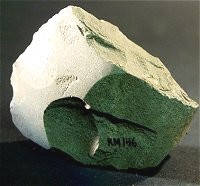 This
Danish Neolithic flint axe is made of a medium grain light gray colored
flint. The two sides are highly polished finish
while the top and bottom have been roughly flaked at a taper angle. This
artifact is the major half including the cutting tip of the axe, which
was damaged in the Neolithic period by the people who fashioned the
axe. It was used as a general use work axe and shows signs of use
since the cutting edge is chipped. The tips are rarer to find than
the back end of the Danish axes since this is the end that is shattered
most often. It
measures 69mm long, 29mm wide, and 53mm at its tallest point.
This artifacts dates from the Funnel Beaker
Culture II (Passage Grave Culture 3,400 to 2,800 B.C.). This
artifact was
found at Kerteminde, Denmark in the early part of the
20th century. This is a nice artifact. This
Danish Neolithic flint axe is made of a medium grain light gray colored
flint. The two sides are highly polished finish
while the top and bottom have been roughly flaked at a taper angle. This
artifact is the major half including the cutting tip of the axe, which
was damaged in the Neolithic period by the people who fashioned the
axe. It was used as a general use work axe and shows signs of use
since the cutting edge is chipped. The tips are rarer to find than
the back end of the Danish axes since this is the end that is shattered
most often. It
measures 69mm long, 29mm wide, and 53mm at its tallest point.
This artifacts dates from the Funnel Beaker
Culture II (Passage Grave Culture 3,400 to 2,800 B.C.). This
artifact was
found at Kerteminde, Denmark in the early part of the
20th century. This is a nice artifact.
PRICE: $70.00 ITEM NO: KM-146
|
|
DESCRIPTION:
Danish Thin Butted Axe
Click on picture for greater detail.
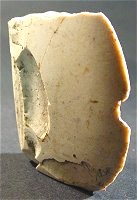 This
Danish Neolithic flint axe is made of a fine grain cream colored chert.
The two sides have a very highly polished finish
while the top and bottom have been carefully flaked to a nice uniform
surface. This artifact is the cutting tip of the axe which was
damaged in the Neolithic period by the people who fashioned the
axe. The cutting edge is still very sharp even after 5000
years. It was used as a general use work axe. The tips are
rarer to find than the back end of the Danish axes since this is the end
that is shattered most often. It
measures 49mm long, 19mm wide, and 58mm at its tallest point. This artifacts dates from the funnel beaker culture II
(passage grave culture 3,400-2,800 B.C.) It was found in Denmark
in the early part of the 20th century. This
Danish Neolithic flint axe is made of a fine grain cream colored chert.
The two sides have a very highly polished finish
while the top and bottom have been carefully flaked to a nice uniform
surface. This artifact is the cutting tip of the axe which was
damaged in the Neolithic period by the people who fashioned the
axe. The cutting edge is still very sharp even after 5000
years. It was used as a general use work axe. The tips are
rarer to find than the back end of the Danish axes since this is the end
that is shattered most often. It
measures 49mm long, 19mm wide, and 58mm at its tallest point. This artifacts dates from the funnel beaker culture II
(passage grave culture 3,400-2,800 B.C.) It was found in Denmark
in the early part of the 20th century.
PRICE: $75.00
Sold ITEM
NO: MS-41
|
|
DESCRIPTION:
Danish Thick Butted Axe
Click on picture for greater detail.
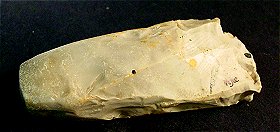 This
Danish Neolithic flint axe is made of a fine grain very light gray and
cream colored chert. All sides show a high polished finish. This artifact has a damage point which occurred
during its use in the Neolithic period by the people who fashioned the
axe. It was used as a work axe tree falling
and wood chopping. It
measures 117mm long, 31mm wide, and 41mm at its tallest point. This
artifacts dates from the funnel beaker culture II (passage grave culture
3,400-2,800 B.C.) It was excavated at the site of "Vejle"
in Jutland, Denmark in the early part of the
20th century. This
Danish Neolithic flint axe is made of a fine grain very light gray and
cream colored chert. All sides show a high polished finish. This artifact has a damage point which occurred
during its use in the Neolithic period by the people who fashioned the
axe. It was used as a work axe tree falling
and wood chopping. It
measures 117mm long, 31mm wide, and 41mm at its tallest point. This
artifacts dates from the funnel beaker culture II (passage grave culture
3,400-2,800 B.C.) It was excavated at the site of "Vejle"
in Jutland, Denmark in the early part of the
20th century.
PRICE: $72.00
Sold ITEM NO: VJ-4
|
|
DESCRIPTION:
Danish Thick Butted Axe
Click on picture for greater detail.
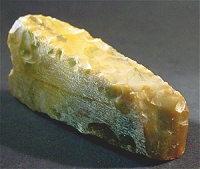 This
Danish Neolithic flint axe is made of a beautiful fine grain very light
orange colored chert. The two sides show a high polished finish
while the top and bottom have been carefully flaked to a nice flat
surface. This artifact has a damaged front half, most likely from
farm equipment. It was used as a work axe tree falling
and wood chopping. It
measures 95mm long, 32mm wide, and 41mm at its tallest point. This
artifacts dates from the funnel beaker culture II (passage grave culture
3,400-2,800 B.C.) It was found at Fredericia, Denmark in the early part of the
20th century. This
Danish Neolithic flint axe is made of a beautiful fine grain very light
orange colored chert. The two sides show a high polished finish
while the top and bottom have been carefully flaked to a nice flat
surface. This artifact has a damaged front half, most likely from
farm equipment. It was used as a work axe tree falling
and wood chopping. It
measures 95mm long, 32mm wide, and 41mm at its tallest point. This
artifacts dates from the funnel beaker culture II (passage grave culture
3,400-2,800 B.C.) It was found at Fredericia, Denmark in the early part of the
20th century.
PRICE: $74.00 Sold ITEM NO: FC-7
|
|
DESCRIPTION:
Flat Trimmed Flake Axe
Click on picture for greater detail.
 This Danish Mesolithic flint Flake Axe belongs to the Ertebölle
Culture 5400-3900 B.C. It shows nice flake scars all over the
entire surface of this artifact. The artifact shows signs of use
on the cutting edge. Its dimensions are 67mm by 50mm by 22mm
thick. This artifact has is a light gray flint with lighter
colored spots and a nice light patina. This Danish Mesolithic flint Flake Axe belongs to the Ertebölle
Culture 5400-3900 B.C. It shows nice flake scars all over the
entire surface of this artifact. The artifact shows signs of use
on the cutting edge. Its dimensions are 67mm by 50mm by 22mm
thick. This artifact has is a light gray flint with lighter
colored spots and a nice light patina.
PRICE: $ 68.00
Sold ITEM
NO: MS-19
|
DESCRIPTION:
Danish Thick Butted Axe
Click on picture for greater detail.
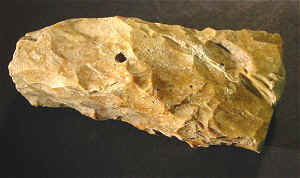
This Danish
Neolithic flint Thick Butted Axe is made of a fine grain tan and cream
colored flint. All sides are roughly flaked. This type of axe was used for a variety of uses including
tree falling and wood chopping. This artifact was heavily used as
evident by the extreme wear on the cutting end, which was later used as
a hammerstone. It measures 102mm long by 49mm tall by 29mm at its
widest point. This artifacts dates from the funnel beaker culture II
(passage grave culture 3,400-2,800 B.C.) It was found in Denmark
in the early part of the 20th century.
PRICE: $ 80.00 Sold ITEM
NO: MS-97
|
|
DESCRIPTION: Danish
Thick Butted Axe
Click on picture for greater detail.
 This
Danish Neolithic flint axe is made of a beautiful fine grain mottled
honey colored chert. All sides show areas of high polished finish.
This type of axe was used for a variety of uses including tree falling
and wood chopping. This artifact has a damage point which occurred
in the Neolithic period by the people who fashioned this artifact. It
measures 82mm long, 26mm wide, and 42mm at its tallest. This
artifacts dates from the funnel beaker culture II (passage grave culture
3,400-2,800 B.C.) It was found in Denmark in the early part of the
20th century. This
Danish Neolithic flint axe is made of a beautiful fine grain mottled
honey colored chert. All sides show areas of high polished finish.
This type of axe was used for a variety of uses including tree falling
and wood chopping. This artifact has a damage point which occurred
in the Neolithic period by the people who fashioned this artifact. It
measures 82mm long, 26mm wide, and 42mm at its tallest. This
artifacts dates from the funnel beaker culture II (passage grave culture
3,400-2,800 B.C.) It was found in Denmark in the early part of the
20th century.
PRICE: $ 90.00
Sold ITEM NO: DM-A7
|
Each artifact is unique and no two
pieces are quite the same, similar to snowflakes. So once an item is purchased,
there usually is not another artifact to replace it.
Contact us at: StoneAgeArtifacts@gmail.com
The contents of this site
under
Copyright © 2001-2026
Stone Age Artifacts
Gallery,
All Rights Reserved
Stoneageartifacts.com
Our web page does
not automatically collect specific information about
visitors.
Aggregate and summary statistics are collected only as a
measure of
our web site’s effectiveness.
|