French
|
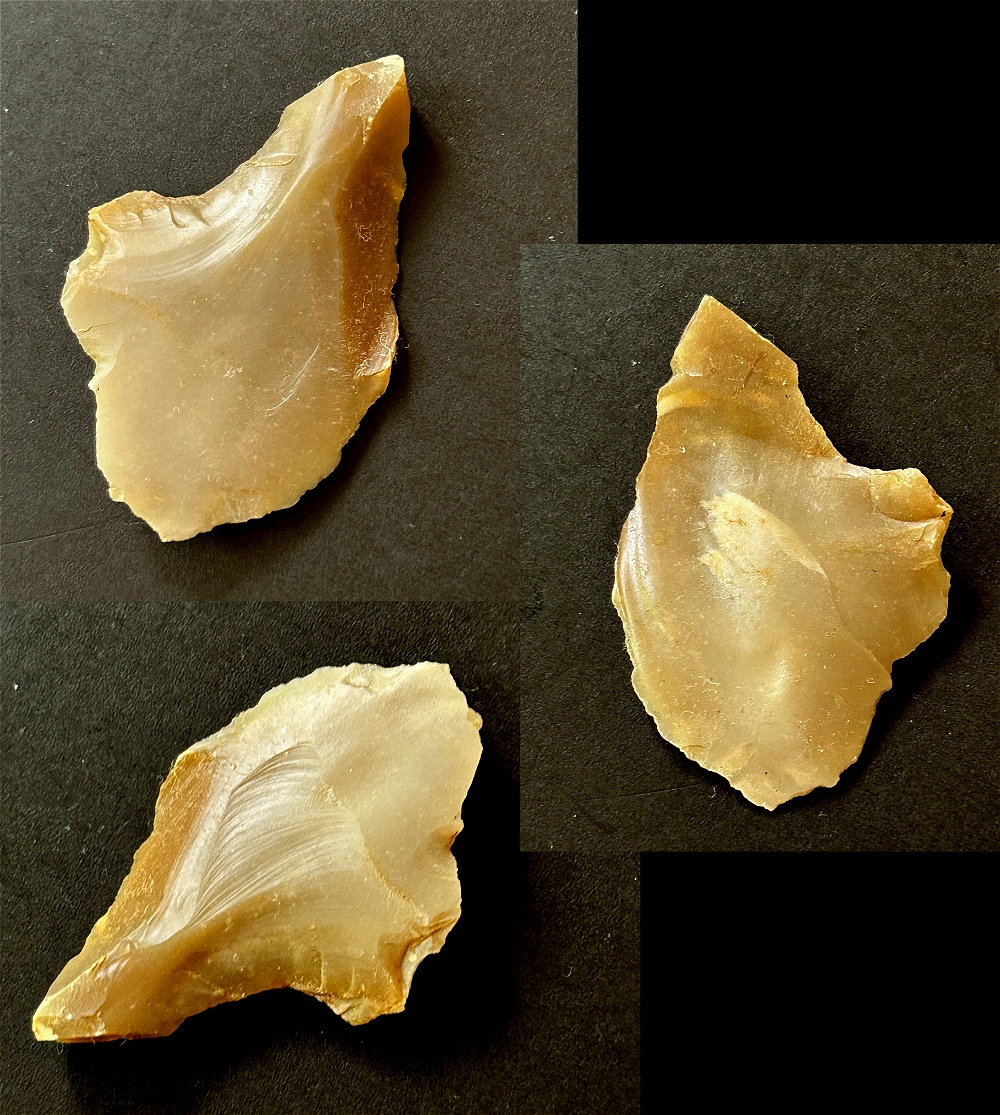
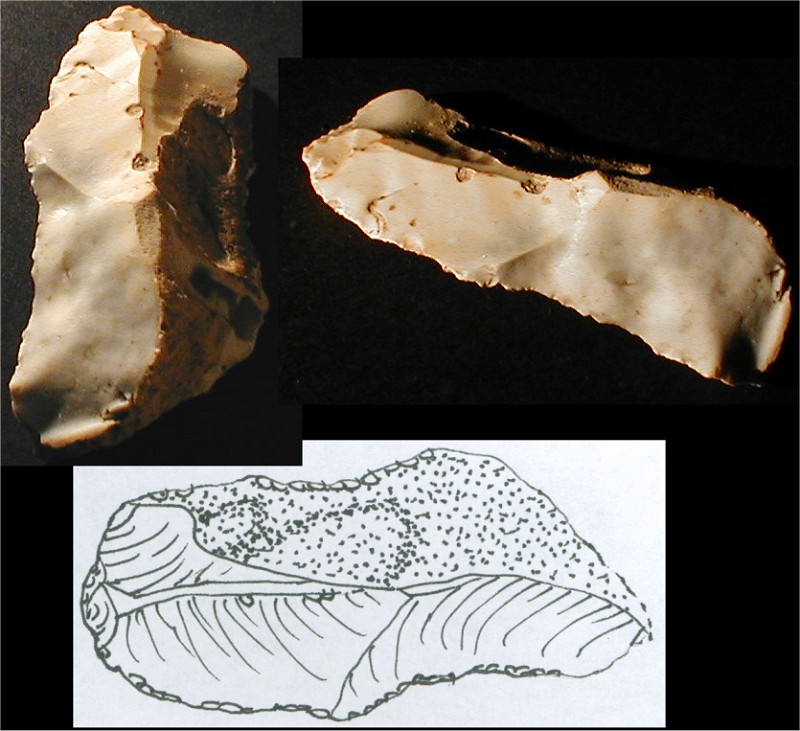
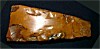
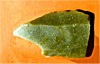
DESCRIPTION: Mousterian Scraper - Fontmaure (site)
Click on this picture for
a more detailed view

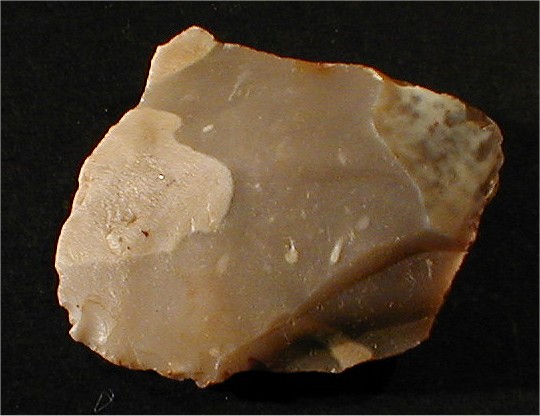
This
artifact is a Mousterian Aged Sidescraper and is of the vibrant
golden "candy" gem-grade jasper found around the famous Neanderthal site
of Fontmaure, France. This artifacts is multicolored with
numerous beautiful green okra, rose, and plum jasper intrusions. This
artifact was flaked off a larger core and worked into a Sidescraper
with one modified cutting edge. No obvious bulb of percussion is
present but the apparent distal end has fine retouches present while the
proximal end is fairly flat. The left hand edge of this artifact is
purposely flaked into a gentle curve with some fine retouches visible.
The flake scars are arranged in a manner common with sidescrapers.
This Sidescraper
shows definite signs of
utilization with wear on the modified curved edge. This
Mousterian Aged Scraper
measures 66mm by 43mm, and dates to the Paleolithic Mousterian period
about 80,000 to 40,000 B.C. This artifact is from
the famous Neanderthal site of Fontmaure, a "crown jewel" site
of the Neanderthal era. The site is named for a local farm and is just
one acre in size, situated in Vellèches, a small rural commune in the
Department of Vienne, France.
This hard to find artifact was collected in the early 1900's and
was originally part of an old French
collection.
PRICE: $ 240.00 ITEM NO: FON-03 |
|
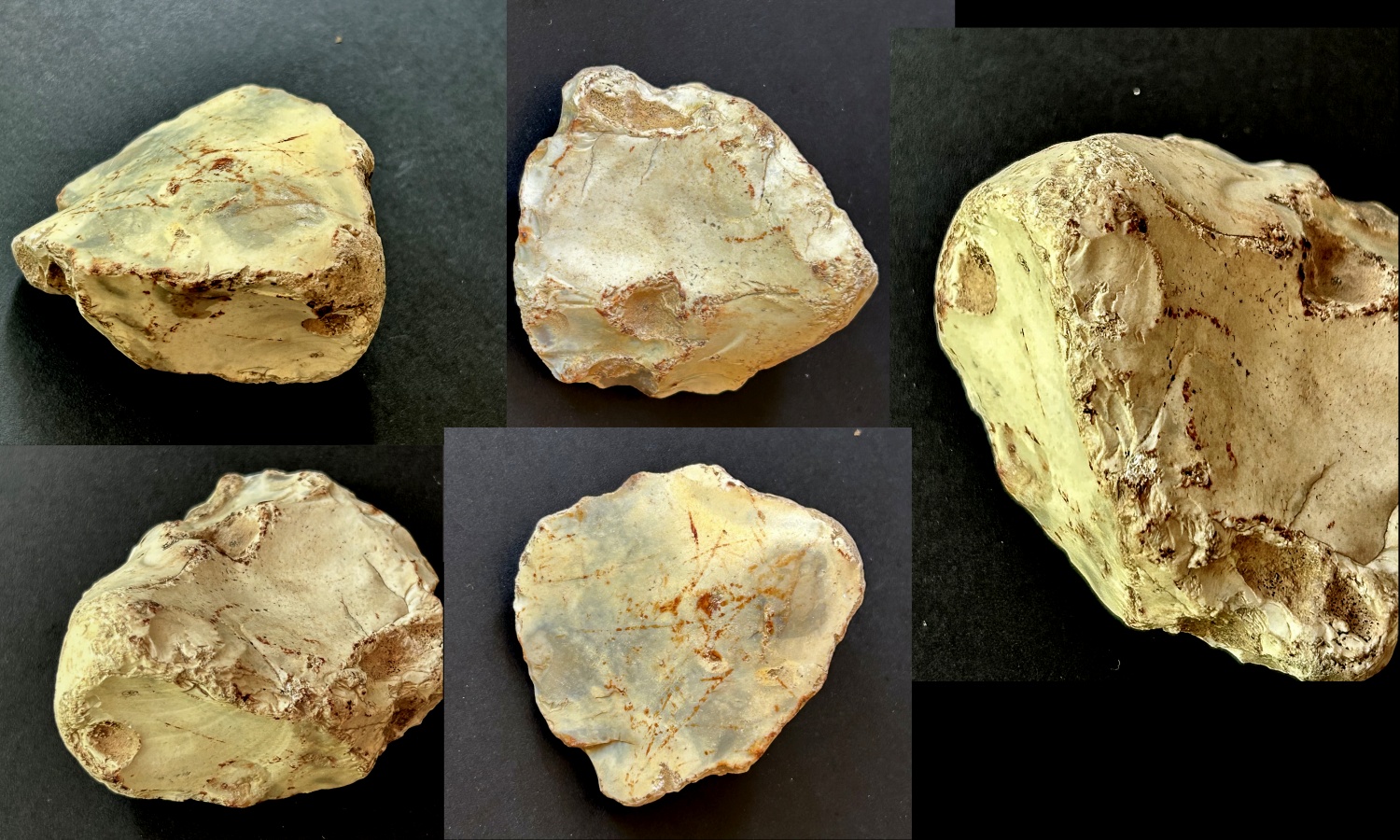
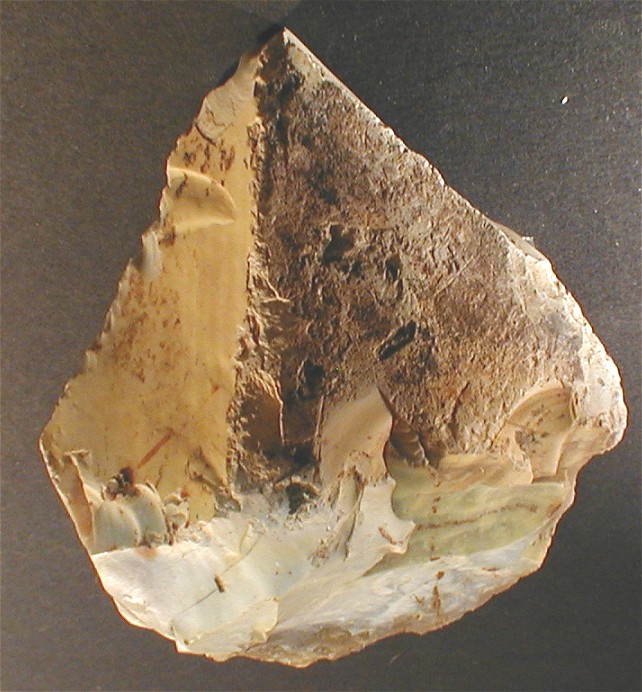
DESCRIPTION:
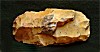
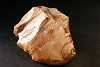
Mousterian Core - Fontmaure (site)
Click on this picture for
a more detailed view

This
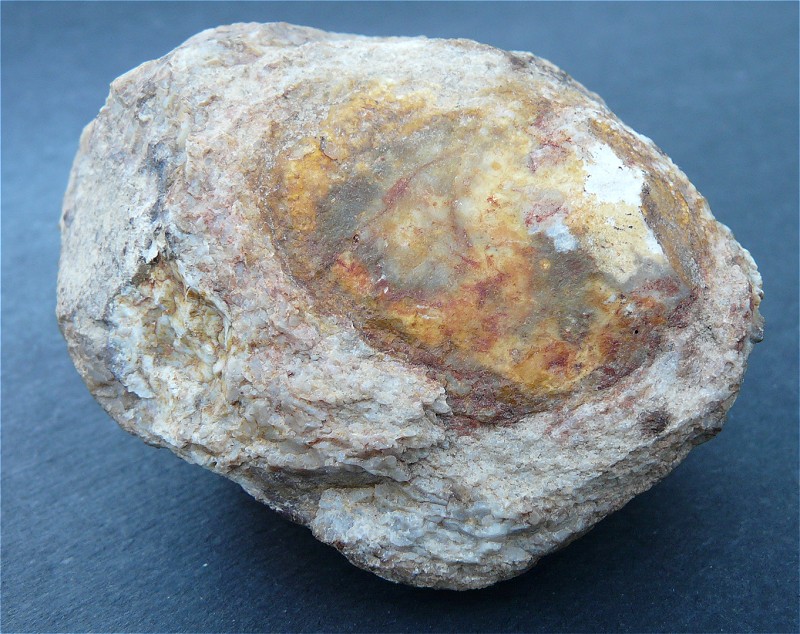
artifact is a large Mousterian Aged Core and is of the vibrant
golden "candy" gem-grade jasper found around the famous Neanderthal site
of Fontmaure, France. This artifacts is multicolored with light
green okra, rose, and swirls of plum jasper intrusions with a light
cream colored weather cortex with numerous small spots of Crustose
lichen growth. This
artifact is a larger sized core and shows extensive chipping and
modification. Large flake scars are present on all but one side. The top
end of this artifact is fairly flat and fits in the hand nicely.
This piece could have functioned as a simplistic Hand Axe or Chopper
with definite signs of utilization on the tip (ancient crush marks).
This
Mousterian Core measures
87mm by 54mm and 43mm width at the thickest point, and dates to the Paleolithic Mousterian period
about 80,000 to 40,000 B.C. This artifact is from
the famous Neanderthal site of Fontmaure, a "crown jewel" site
of the Neanderthal era. The site is named for a local farm and is just
one acre in size, situated in Vellèches, a small rural commune in the
Department of Vienne, France.
This hard to find artifact was collected in the early 1900's and
was originally part of an old French
collection.
PRICE: $ 195.00 ITEM NO: FON-02 |
|
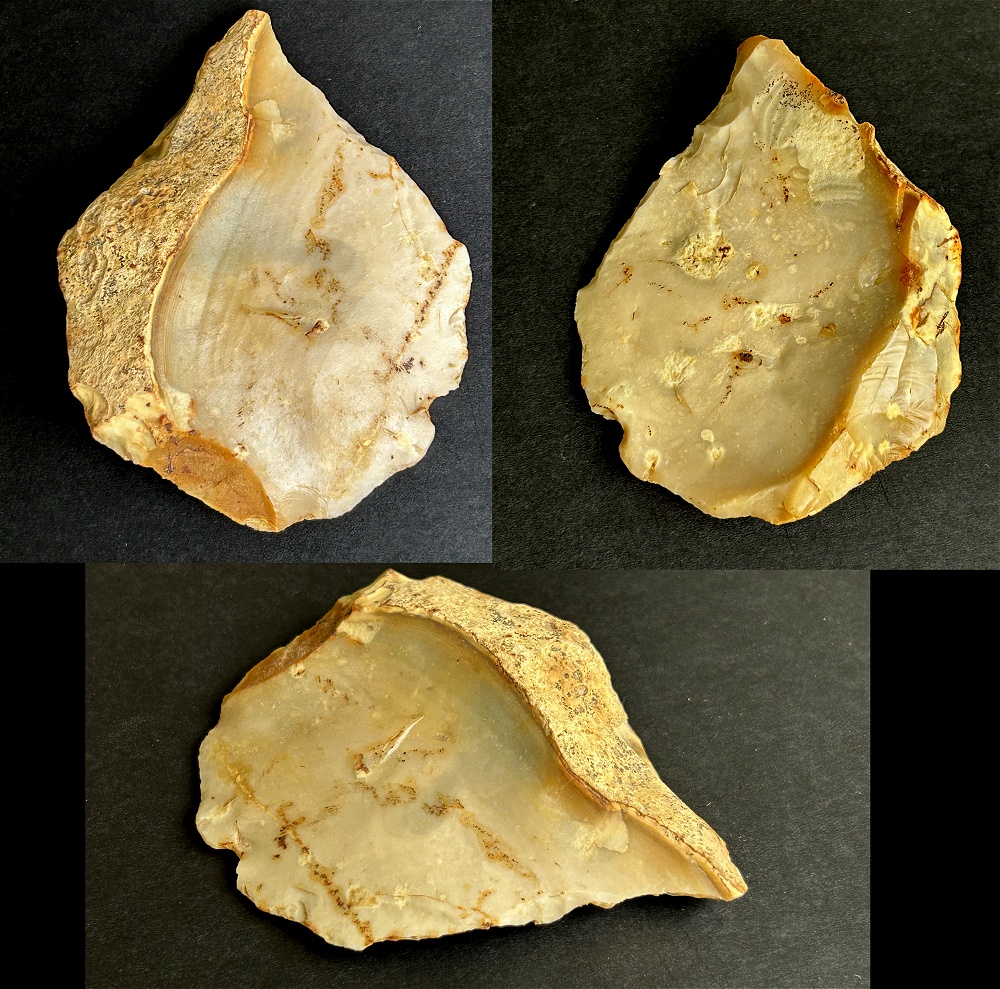
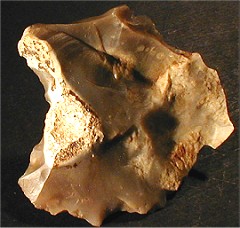
DESCRIPTION:
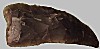
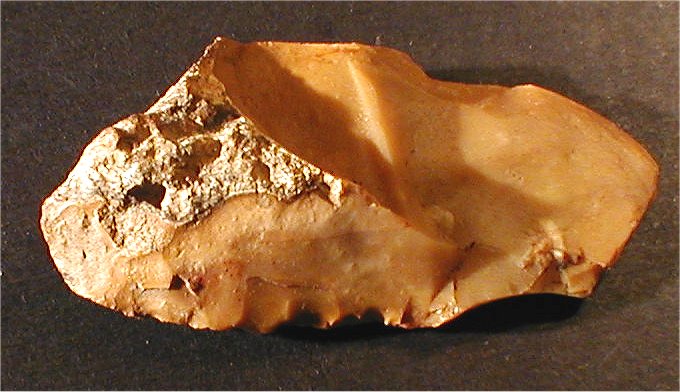
Mousterian Chopper - Fontmaure (site)
Click on this picture for
a more detailed view

This
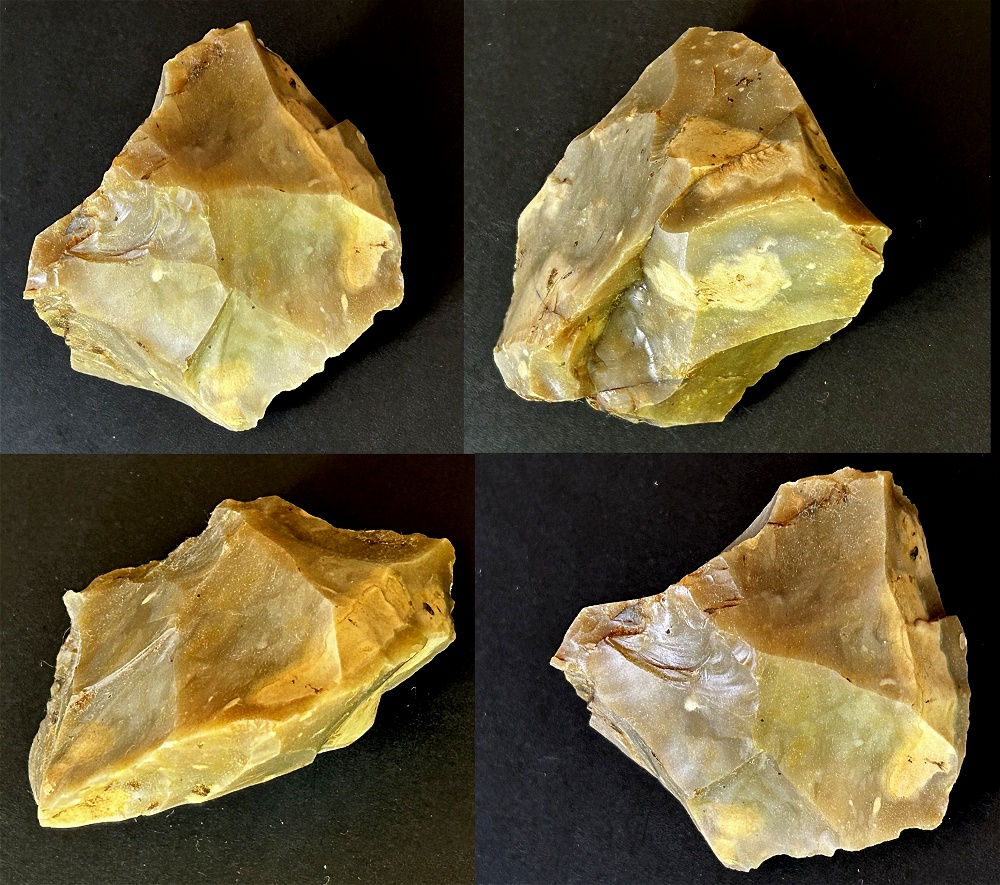
artifact is a Mousterian Aged Chopper and is of the vibrant
golden "candy" gem-grade jasper found around the famous Neanderthal site
of Fontmaure, France. This artifacts is multicolored with small
plum jasper intrusions, a rose colored cortex, and a small pocket of crystal intrusions. This
artifact was modified from a larger core and worked into a triangular
shaped chopping tool with a heavily utilized chopping edge (see
detailed edge). There are large sized retouches on the distal end.
The platform on the proximal end is fairly flat and fits in the hand
nicely. This piece would have been most likely used for fine chopping
activities due to its size. This
Mousterian Aged Chopper
measures 71mm by 44mm and 46mm width at the thickest point, and dates to the Paleolithic Mousterian period
about 80,000 to 40,000 B.C. This artifact is from
the famous Neanderthal site of Fontmaure, a "crown jewel" site
of the Neanderthal era. The site is named for a local farm and is just
one acre in size, situated in Vellèches, a small rural commune in the
Department of Vienne, France.
This hard to find artifact was collected in the early 1900's and
was originally part of an old French
collection.
PRICE: $ 230.00 ITEM NO: FON-01 |
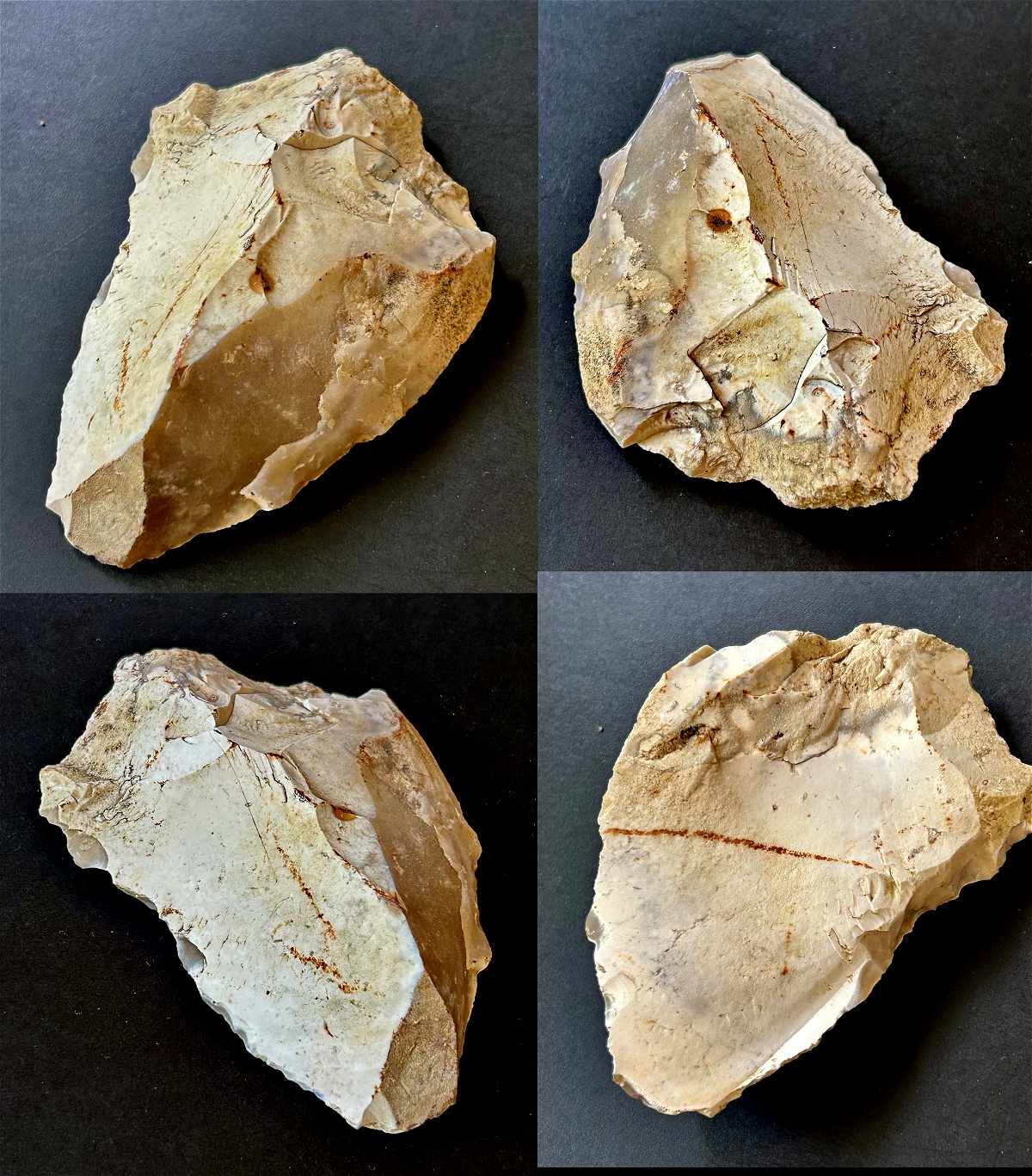
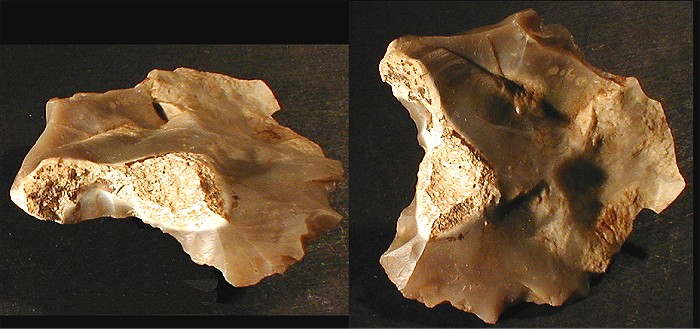
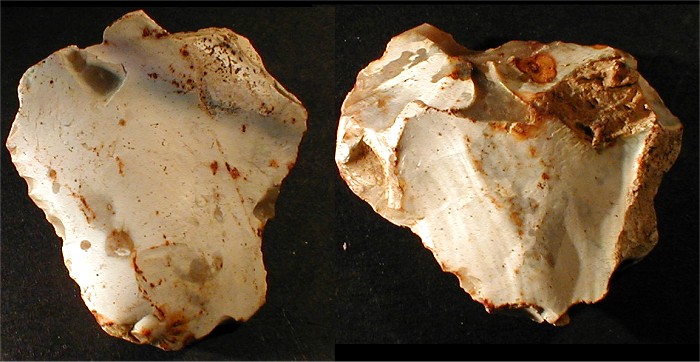
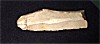
DESCRIPTION: Paleolithic Hammer Stone
Click on this picture for
a more detailed view

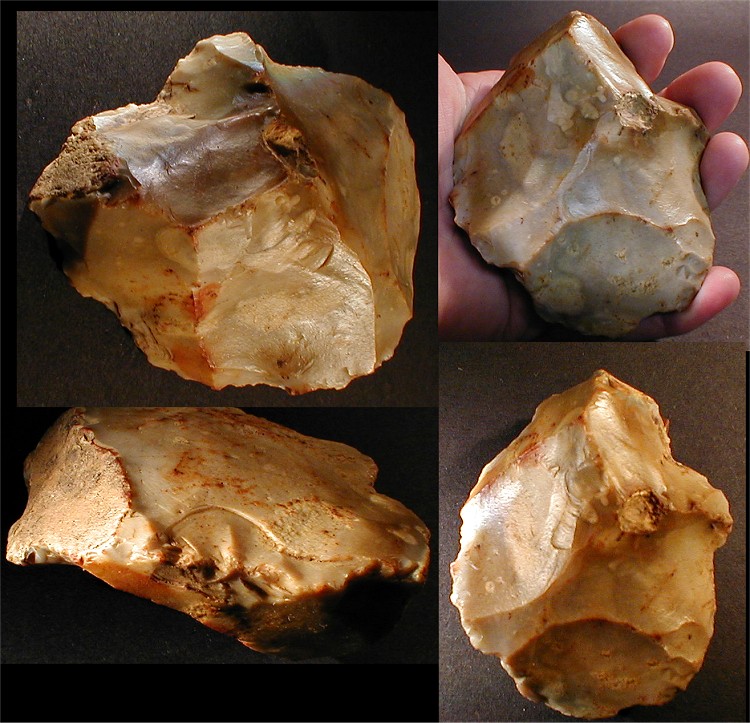
This
is a Mousterian of Acheulean Tradition (Paleolithic) age
Hammer Stone shows obvious worked edges and signs of heavy use (i.e.
flint knapping, retouching, and crushing objects). This artifact is of a fine grained gray
mottled chert with a heavy cream colored patina
and a few iron oxide
highlights. It measures 69mm by 64mm by 34mm.
This Hammer Stone
was a field find
as evident with a couple of minor plow marks present. It was discovered at a site in the Department of Dordogne, France. This piece dates to the Neanderthals of the
Late Mousterian - Mousterian of Acheulean Tradition (MAT), and dates
to about 90,000 to 40,000 B.C. This
artifact is from an old Canadian collection originally sourced in
France.
PRICE: $ 160.00
ITEM NO: FA-24 |
|
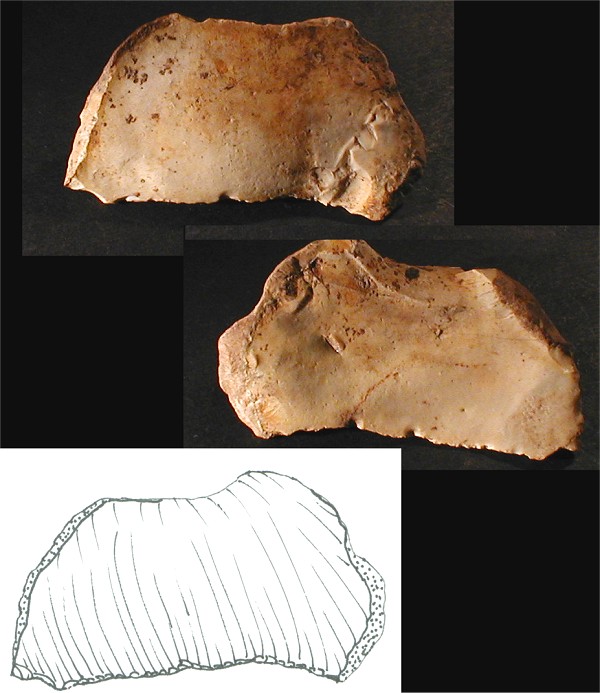
DESCRIPTION: Mousterian
Flake Scraper - Le Moustier (site)
Click on this picture for
a more detailed view
 This
Mousterian Scraper is made from a Levallois flake.
Made of the classic dark
gray fine grain flint with lighter gray inclusions found around the
famous Neanderthal site of Le Moustier.
This Mousterian Levallois Flake Scraper
has the classic light tan colored cortex on the lateral side. This
scraper also has some of the classic original cave crust still attached to
this artifact's surfaces. The artifact
has some minor retouches on the distal end and shows some signs of
utilization with wear on both distal edges near the tip. There is a
prominent bulb of percussion visible on the proximal end along with
a nice set of conchoidal rings on the ventral surface.
The
artifact measures 50mm by 28mm and has "FM 7212" scribed on its surface. This artifact is from
the famous Neanderthal site of Le Moustier, the namesake of the
Mousterian Paleolithic period. The two rock shelters that
make up Le Moustier are located on the right bank of the Vézère River at
Peyzac-le-Moustier, a village in the Department of Dordogne, France. This
piece dates from approximately 55,000 to 40,000 B.C.
This hard to find artifact is from an
old German collection. This
Mousterian Scraper is made from a Levallois flake.
Made of the classic dark
gray fine grain flint with lighter gray inclusions found around the
famous Neanderthal site of Le Moustier.
This Mousterian Levallois Flake Scraper
has the classic light tan colored cortex on the lateral side. This
scraper also has some of the classic original cave crust still attached to
this artifact's surfaces. The artifact
has some minor retouches on the distal end and shows some signs of
utilization with wear on both distal edges near the tip. There is a
prominent bulb of percussion visible on the proximal end along with
a nice set of conchoidal rings on the ventral surface.
The
artifact measures 50mm by 28mm and has "FM 7212" scribed on its surface. This artifact is from
the famous Neanderthal site of Le Moustier, the namesake of the
Mousterian Paleolithic period. The two rock shelters that
make up Le Moustier are located on the right bank of the Vézère River at
Peyzac-le-Moustier, a village in the Department of Dordogne, France. This
piece dates from approximately 55,000 to 40,000 B.C.
This hard to find artifact is from an
old German collection.
PRICE: $ 265.00 ITEM NO: LMP-06 |
|
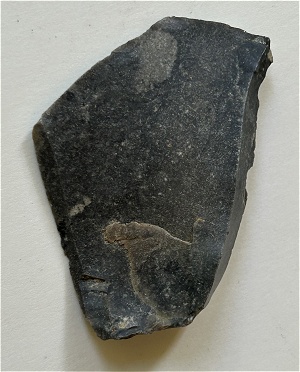
DESCRIPTION: Mousterian
Flake Scraper - Le Moustier (site)
Click on this picture for
a more detailed view
 This
Mousterian Scraper is made from a Levallois flake.
Made of the classic dark
gray fine grain flint with lighter gray inclusions found around the
famous Neanderthal site of Le Moustier.
This Mousterian Levallois Flake Scraper shows some signs of
utilization with wear on the distal end. There is a bulb of percussion evident
on the proximal end, the
artifact measures 55mm by 38mm. This artifact is from
the famous Neanderthal site of Le Moustier, the namesake of the
Mousterian Paleolithic period. The two rock shelters that
make up Le Moustier are located on the right bank of the Vézère River at
Peyzac-le-Moustier, a village in the Department of Dordogne, France. This
piece dates from approximately 55,000 to 40,000 B.C.
This hard to find artifact is from an
old German collection. This
Mousterian Scraper is made from a Levallois flake.
Made of the classic dark
gray fine grain flint with lighter gray inclusions found around the
famous Neanderthal site of Le Moustier.
This Mousterian Levallois Flake Scraper shows some signs of
utilization with wear on the distal end. There is a bulb of percussion evident
on the proximal end, the
artifact measures 55mm by 38mm. This artifact is from
the famous Neanderthal site of Le Moustier, the namesake of the
Mousterian Paleolithic period. The two rock shelters that
make up Le Moustier are located on the right bank of the Vézère River at
Peyzac-le-Moustier, a village in the Department of Dordogne, France. This
piece dates from approximately 55,000 to 40,000 B.C.
This hard to find artifact is from an
old German collection.
PRICE: $ 210.00 ITEM NO: LMP-04 |
|
DESCRIPTION: Mousterian
Flake Scraper - Le Moustier (site)
Click on this picture for
a more detailed view
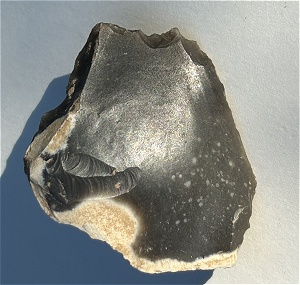 This
Mousterian Scraper is made from a Levallois flake.
Made of the classic dark
gray fine grain flint with lighter gray inclusions found around the
famous Neanderthal site of Le Moustier.
This Mousterian
Flake Scraper also
has the classic light tan colored cortex on the entire proximal end. The artifact
has some retouches on the distal end and shows some signs of
utilization with wear on the right lateral side. There is a
general bulb of percussion visible on the proximal end along with some
minor flake scars on the right hand side.
The
artifact measures 51mm by 42mm and 17mm at the thickest point. This artifact is from
the famous Neanderthal site of Le Moustier, the namesake of the
Mousterian Paleolithic period. The two rock shelters that
make up Le Moustier are located on the right bank of the Vézère River at
Peyzac-le-Moustier, a village in the Department of Dordogne, France. This
piece dates from approximately 55,000 to 40,000 B.C.
This hard to find artifact is from an
old German collection. This
Mousterian Scraper is made from a Levallois flake.
Made of the classic dark
gray fine grain flint with lighter gray inclusions found around the
famous Neanderthal site of Le Moustier.
This Mousterian
Flake Scraper also
has the classic light tan colored cortex on the entire proximal end. The artifact
has some retouches on the distal end and shows some signs of
utilization with wear on the right lateral side. There is a
general bulb of percussion visible on the proximal end along with some
minor flake scars on the right hand side.
The
artifact measures 51mm by 42mm and 17mm at the thickest point. This artifact is from
the famous Neanderthal site of Le Moustier, the namesake of the
Mousterian Paleolithic period. The two rock shelters that
make up Le Moustier are located on the right bank of the Vézère River at
Peyzac-le-Moustier, a village in the Department of Dordogne, France. This
piece dates from approximately 55,000 to 40,000 B.C.
This hard to find artifact is from an
old German collection.
PRICE: $ 240.00 ITEM NO: LMP-05 |
DESCRIPTION: Hand Axe - Triangular Partial Biface
Click on this picture for
a more detailed view

This
is a Mousterian of Acheulean Tradition (Paleolithic) age hand axe,
measuring 113mm by 75mm by
20mm (at thickest point). This artifact is a Triangular shaped Partial Biface
French Hand
Axe. This Biface is minimally retouched and has a
flatness ratio of 2.67, which classifies this piece as
"Thin". This artifact has a nice blunt ancient tip consistent
with ancient utilization. This artifact was made from a large flake
blank as evident by the large impact zone on the proximal end. The right
side edge on the dorsal surface has several serrated retouches while the
left
edge shows little modification. The ventral surface is untouched.
This artifact is a light tan colored fine grain chert with a nice deep
cream colored patina and a few iron oxide
highlights. The workmanship is
fine. This Triangular shaped Partial Biface was a field find
as evident with the plow marks on ventral surface. It was discovered at a site in the Department of Dordogne, France. This piece dates to the Neanderthals of the
Late Mousterian - Mousterian of Acheulean Tradition (MAT), and dates
to about 90,000 to 40,000 B.C. This
artifact is from an old Canadian collection originally sourced in
France.
PRICE: $ 220.00 ITEM NO: FPD-13 |
|
DESCRIPTION: Typical
Flake Scraper
Click on this picture for
a more detailed view
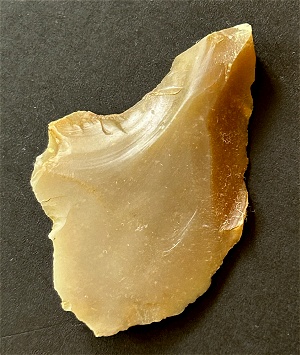
This Aurignacian aged
Flake Scraper is of a very fine grained
tan and honey colored chalcedony with a couple of lighter intrusion. This
artifact is made from a flake chipped off a larger
core.
The workmanship is fine and has several nice flake scars. The piece has a
rounded cutting edge that is still fairly sharp. It measures
50mm by 32mm and would have been used by early hunter-gathers for hide
preparation (skinning hide), woodworking, and cutting
meat. This Typical Flake Scraper
was discovered in the Paris Basin region of France. It dates from
the Upper Paleolithic, the Aurignacian industry, about 40,000 to
27,000 B.C.
PRICE: $
38.00 ITEM NO: FPS-25 |
|
DESCRIPTION:
Mousterian Naturally Backed Knife
Click on this picture for
a more detailed view
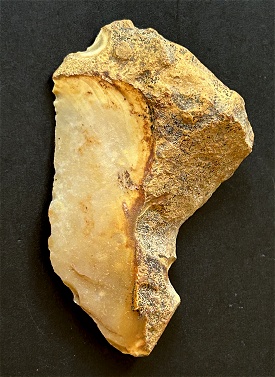
The definition of a naturally backed
knife is an unretouched flake or blade that has a sharp cutting edge on
one margin and a natural cortical surface on the opposing edge, Bordes (1961:33).
This artifact is
made out of a flake that is a honey and tan colored fine grain chert. There
are signs of utilization occurring on the proximal end of this artifact.
The majority of the surface of this Mousterian Naturally Backed Knife
is covered in a handsome orange colored cortex with numerous small spots
of Crustose lichen growth. This artifact measures
71mm by 44mm and 15mm at the thick point. It is a very nice example of this
type of tool. It was discovered at a site in the Department of Dordogne, France. This piece dates to the Neanderthals of the Late
Mousterian (MAT) - Mousterian of Acheulean Tradition, dates to about
90,000 to 40,000 B.C. This
artifact is from an old Canadian collection originally sourced in
France.
PRICE: $ 85.00
ITEM NO: FPM-14 |
|
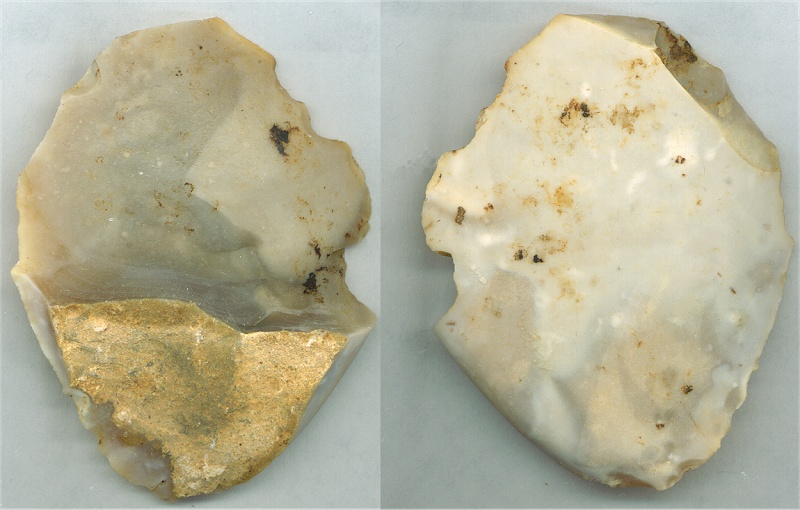
DESCRIPTION: Mousterian
Disk Scraper

Click on this picture for
a more detailed view
This artifact is a tan
colored fine grain chert with a thick cream colored patina, including an
orange tip. This Disc Scraper
has minor retouches around most of the circular edge and several
areas of Crustose lichen growth. It measures 42mm by 40mm, and
is a very nice artifact with signs of utilization. This
artifact was a field find as evident with the plow marks on dorsal
surface. The ventral surface has one ancient chip. It was discovered at a site in the Department of Dordogne, France. This
piece dates to the Neanderthals of the Late Mousterian (MAT) - Mousterian of Acheulean Tradition, dates to about 90,000 to 40,000 B.C.
This artifact is from an old Canadian collection originally
sourced in France.
PRICE: $ 60.00
ITEM NO: FPM-13 |
|
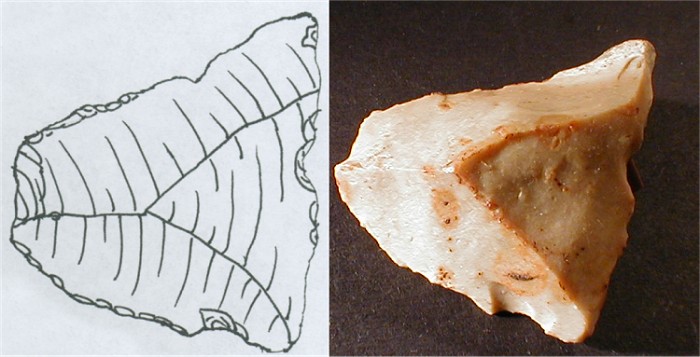
DESCRIPTION:
Mousterian Point
This artifact is of a light tan
colored fine grain flint with lighter mottling. This piece has developed a nice cream colored patina accented with some iron
oxide highlights. Nice flake scars are present on both side of the very
distinct center of axis line on the dorsal surface. No bulb of percussion
is visible. Large retouches are evident around the entire piece. This
Mousterian Point measures
58mm by 30mm. It was discovered at a site in the
Department of Dordogne, France. This artifact dates to the
Neanderthals of the Late Mousterian (MAT) - Mousterian of Acheulean Tradition, dates to about 90,000 to 40,000 B.C.
This artifact is from an old Canadian collection originally
sourced in France
piece has developed a nice cream colored patina accented with some iron
oxide highlights. Nice flake scars are present on both side of the very
distinct center of axis line on the dorsal surface. No bulb of percussion
is visible. Large retouches are evident around the entire piece. This
Mousterian Point measures
58mm by 30mm. It was discovered at a site in the
Department of Dordogne, France. This artifact dates to the
Neanderthals of the Late Mousterian (MAT) - Mousterian of Acheulean Tradition, dates to about 90,000 to 40,000 B.C.
This artifact is from an old Canadian collection originally
sourced in France
Click on
the picture for
a more detailed view
PRICE: $ 52.00
ITEM NO: FPM-15 |
|
DESCRIPTION:
Naturally Backed Knife
This Aurignacian aged
Naturally Backed Knife is of a very fine grained
light gray and tan colored flint with some lighter intrusion. This
artifact
is made from a Levallois flake and has a nice bulb of
percussion evident on the proximal end.
The workmanship is fine and has a sharp cutting edge. The definition of a naturally backed
knife is an unretouched flake that has a sharp cutting edge on
one margin and a natural cortical surface on the opposing edge, Bordes (1961:33),
which this piece matches. There are iron oxide deposits and
staining on both sides of this artifacts. This piece measures 81mm by 35mm and would have been used for skinning hides and cutting
meat. This Naturally Backed Knife
was discovered in the Paris Basin region of France. It dates from
the Upper Paleolithic, the Aurignacian industry, about 40,000 to
27,000 B.C.

Click on this picture for
a more detailed view
PRICE: $
60.00 ITEM NO: FPS-24 |
DESCRIPTION: Hand
Axe - Subtriangular Biface (Pélécyformes)
Click on this picture for
a more detailed view
 This
is a Mousterian of Acheulean Tradition (Paleolithic) age hand axe, measuring
101mm by 76mm by
20mm (at thickest point). This artifact is a Subtriangular Biface French Hand
Axe. It falls under the subtype of a "Pélécyformes", these
artifacts are defined as having a rounded bases with slightly concave,
convex, or straight lateral edges. This artifact has a very large
rounded base that is fairly sharp. The right hand lateral side above the
mid point is straight and the left hand side is slightly concave. This Biface is partially retouched and has a
flatness ratio of 3.80, which classifies this piece as
"Thin". This artifact has a nice ancient tip. The left hand
side of the ventral surface shows some modifications while the dorsal
surface is mainly untouched. This artifact is
light tan and gray colored fine grain chert with a light patina.
Cortex can be seen on the dorsal surface covering approximately 20 percent of this artifact.
The workmanship is fine. This artifact was a field find as evident with
the plow marks on both side. It was discovered at a site in the
Department of Dordogne, France. This piece dates to the
Neanderthals of the Late Mousterian - Mousterian of Acheulean Tradition (MAT),
and dates to about 90,000 to 40,000 B.C. This artifact is from an
old Canadian collection originally sourced in France. This
is a Mousterian of Acheulean Tradition (Paleolithic) age hand axe, measuring
101mm by 76mm by
20mm (at thickest point). This artifact is a Subtriangular Biface French Hand
Axe. It falls under the subtype of a "Pélécyformes", these
artifacts are defined as having a rounded bases with slightly concave,
convex, or straight lateral edges. This artifact has a very large
rounded base that is fairly sharp. The right hand lateral side above the
mid point is straight and the left hand side is slightly concave. This Biface is partially retouched and has a
flatness ratio of 3.80, which classifies this piece as
"Thin". This artifact has a nice ancient tip. The left hand
side of the ventral surface shows some modifications while the dorsal
surface is mainly untouched. This artifact is
light tan and gray colored fine grain chert with a light patina.
Cortex can be seen on the dorsal surface covering approximately 20 percent of this artifact.
The workmanship is fine. This artifact was a field find as evident with
the plow marks on both side. It was discovered at a site in the
Department of Dordogne, France. This piece dates to the
Neanderthals of the Late Mousterian - Mousterian of Acheulean Tradition (MAT),
and dates to about 90,000 to 40,000 B.C. This artifact is from an
old Canadian collection originally sourced in France.
PRICE: $ 244.00 Sold ITEM NO: FPD-12 |
DESCRIPTION: Hand Axe - Partial Biface
Click on this picture for
a more detailed view
 This
is a Mousterian of Acheulean Tradition (Paleolithic) age hand axe, measuring
88mm by 60mm by
20mm (at thickest point). This artifact is a Partial Biface French Hand
Axe. This Biface is partially retouched and has a
flatness ratio of 3.00, which classifies this piece as
"Thin". This artifact has a nice blunt ancient tip. The left
side edge on the dorsal surface has serrated retouches while the right
edge shows little modification. The proximal end has a few minor
retouches and a modern break. Ventral surface is mainly untouched. This artifact is
a beautiful honey colored tan fine grain mottled chert with a nice deep
light tan patina. Cortex can be seen on the dorsal surface
covering approximately 50 percent of this artifact. The workmanship is
fine. It was discovered at a site in the Department of Dordogne, France. This piece dates to the Neanderthals of the
Late Mousterian - Mousterian of Acheulean Tradition (MAT), and dates
to about 90,000 to 40,000 B.C. This
artifact is from an old Canadian collection originally sourced in
France. This
is a Mousterian of Acheulean Tradition (Paleolithic) age hand axe, measuring
88mm by 60mm by
20mm (at thickest point). This artifact is a Partial Biface French Hand
Axe. This Biface is partially retouched and has a
flatness ratio of 3.00, which classifies this piece as
"Thin". This artifact has a nice blunt ancient tip. The left
side edge on the dorsal surface has serrated retouches while the right
edge shows little modification. The proximal end has a few minor
retouches and a modern break. Ventral surface is mainly untouched. This artifact is
a beautiful honey colored tan fine grain mottled chert with a nice deep
light tan patina. Cortex can be seen on the dorsal surface
covering approximately 50 percent of this artifact. The workmanship is
fine. It was discovered at a site in the Department of Dordogne, France. This piece dates to the Neanderthals of the
Late Mousterian - Mousterian of Acheulean Tradition (MAT), and dates
to about 90,000 to 40,000 B.C. This
artifact is from an old Canadian collection originally sourced in
France.
PRICE: $ 176.00 ITEM NO: FPD-10 |
DESCRIPTION: Hammer Stone
Click on this picture for a more
detailed view
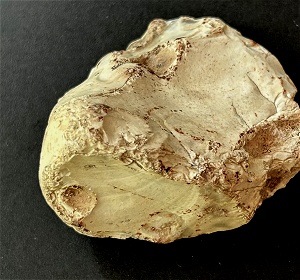 This
is a Mousterian of Acheulean Tradition (Paleolithic) age hammer stone,
measuring 60mm by 50mm by 35mm (at its thickest point). This artifact is of a
fine grained mottled tan chert, with a heavy cream colored patina. This
artifact has been worked into a semi-circle shape with obvious worked edges and signs of heavy
use (i.e. flint knapping, retouching, and crushing
objects). This artifact was a field find as evident with the plow
marks on the back side. It was discovered at a site in the
Department of Dordogne, France. This piece dates to the
Neanderthals of the Late Mousterian - Mousterian of Acheulean Tradition (MAT), and dates
to about 90,000 to 40,000 B.C. This
artifact is from an old Canadian collection originally sourced in
France. This
is a Mousterian of Acheulean Tradition (Paleolithic) age hammer stone,
measuring 60mm by 50mm by 35mm (at its thickest point). This artifact is of a
fine grained mottled tan chert, with a heavy cream colored patina. This
artifact has been worked into a semi-circle shape with obvious worked edges and signs of heavy
use (i.e. flint knapping, retouching, and crushing
objects). This artifact was a field find as evident with the plow
marks on the back side. It was discovered at a site in the
Department of Dordogne, France. This piece dates to the
Neanderthals of the Late Mousterian - Mousterian of Acheulean Tradition (MAT), and dates
to about 90,000 to 40,000 B.C. This
artifact is from an old Canadian collection originally sourced in
France.
PRICE: $ 180.00 ITEM NO: FPD-11 |
|
DESCRIPTION: Aurignacian
aged Chopper
This Aurignacian aged Chopper is of a very fine grained
tan and caramel colored chalcedony with some lighter intrusion.
This artifact was crafted from a flake preparation core.
Nice flake scars are present on all surfaces of this artifact. The
cutting edge is still quite sharp. The platform on the distal end is
fairly flat. This piece would not have been used for heavy duty chopping
but most likely for fine chopping activities due to its size. This
Chopper measures 66mm by 47mm and 30mm width at the base. This artifact
was discovered in the Paris Basin region of France. It dates from
the Upper Paleolithic, the Aurignacian industry, about 40,000 to
27,000 B.C.

Click on this picture for
a more detailed view
PRICE: $
96.00 ITEM NO: FPS-21 |
|
DESCRIPTION: Typical
Flake Scraper
This Aurignacian aged
Typical
Flake Scraper is of a very fine grained
tan and caramel colored chalcedony with some lighter intrusion. This
artifact is made from a Levallois flake and has a nice bulb of
percussion evident on the proximal end.
The workmanship is fine and has nice flake scars. The piece has a rounded
cutting edge with minor retouches and shows definite signs of
utilization with the retouches being worn down. It measures
44mm by 36mm and would have been used for skinning hides and cutting
meat. This Flake Scraper
was discovered in the Paris Basin region of France. It dates from
the Upper Paleolithic, the Aurignacian industry, about 40,000 to
27,000 B.C.

Click on this picture for
a more detailed view
PRICE: $
35.00 ITEM NO: FPS-22 |
|
DESCRIPTION:
Retouched Levallois Point
This
retouched Levallois point is made on a large semi-uniform flake. It is of a very fine
grained light tan mottled chert with some iron oxide crystals on both
surfaces. There are fine retouches on sides of the center of axis. There
is a small bulb of
percussion on the ventral surface at the proximal end which is
the narrow end of this artifact (the bulb of
percussion is usually on the opposite end). It measures 70mm in length and
42mm in width and has a pronounced curvature. This
Retouched Levallois Point was discovered in the Paris Basin
region of France. It dates from the Upper Paleolithic, the Aurignacian
industry, about 40,000 to 27,000 B.C.
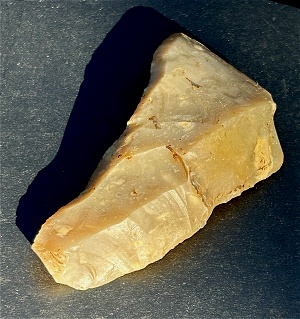
Click on picture for greater detail.
PRICE: $ 45.00
ITEM NO: FPS-19 |
|
DESCRIPTION: Upper Paleolithic Flake Tool
This artifact is of a fine grained light tan mottled chert with some iron oxide crystals on both
surfaces. It
possess a large bulb of percussion on the ventral
surface . The
right hand side is still very sharp. There is a small amount (5%) of
cortex left on the distal end. This
artifact is thin (8mm) and measures 60mm
by 58mm. This Upper Paleolithic Flake Tool
was discovered in the Paris Basin region of France. It dates from
the Upper Paleolithic, the Aurignacian industry, about 40,000 to
27,000 B.C. . The
right hand side is still very sharp. There is a small amount (5%) of
cortex left on the distal end. This
artifact is thin (8mm) and measures 60mm
by 58mm. This Upper Paleolithic Flake Tool
was discovered in the Paris Basin region of France. It dates from
the Upper Paleolithic, the Aurignacian industry, about 40,000 to
27,000 B.C.
Click on this picture for
a more detailed view
PRICE: $ 44.00 ITEM NO: FPS-20 |
DESCRIPTION: Upper Paleolithic Burin / Drill
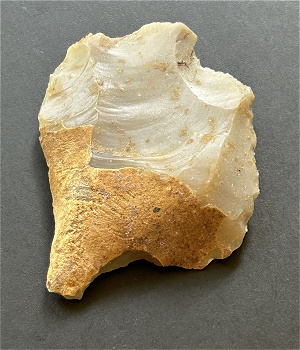
Click on picture for greater detail.
This artifact is a French Upper Paleolithic aged Burin / Drill made of a
tan colored chert with lighter colored intrusions.
This artifact has a
large bulb of
percussion on the proximal end. This artifact has fine retouches
on the left lateral side and also at the point. This piece show some signs of utilization with wear
on the tip and sides of the drill point. This artifact was
fashioned via the Levallois technique as evident by the flake scaring
pattern. There is about 25% cortex visible on the
dorsal surface. This
Flint Burin / Drill measures 76mm long by 61mm wide.
This Upper Paleolithic
Burin / Drill
was discovered in the Paris Basin region of France. It dates from
the Upper Paleolithic, the Aurignacian industry, about 40,000 to
27,000 B.C. This artifact is from an old German
collection.
PRICE: $ 76.00 ITEM NO: FPS-23 |
|
 DESCRIPTION: DESCRIPTION:
Mousterian Point
This artifact is a light and dark honey colored jasper with modified
edges. A large amount of cortex is present on the majority of the
dorsal surface. The bulb of percussion
is located on the ventral surface (back side) on the top of this
photo. Large retouches are evident around the entire piece. A few flake scars
are arranged on the left side of this beautiful artifact. It measures
68mm by 36mm. It was discovered at a site in the
Department of Dordogne, France. This piece dates to the
Neanderthals of the Late Mousterian (MAT) - Mousterian of Acheulean Tradition, dates to about 90,000 to 40,000 B.C.
Click on
the picture for
a more detailed view
PRICE: $ 90.00 Sold ITEM NO: FPM-12 |
|
DESCRIPTION:
Retouched Levallois Point
This
Levallois point is made on a large semi-uniform flake. It is of a very fine
grained light gray mottled chert with a small amount of cortex
on the proximal end. The distal end has been worked nicely on
both sides of the center of axis line. The bulb of
percussion is not evident. It measures 84mm in length and
44mm in width. This artifact was discovered in the Paris Basin
region of France. It dates from the Upper Paleolithic, the Aurignacian
industry, about 40,000 to 27,000 B.C.

Click on picture for greater detail.
PRICE: $ 68.00
ITEM NO: FPS-09 |
|
DESCRIPTION:
Denticulated Convex Scraper
This piece was made from a Levallois flake
as evident from the classic bulb of percussion on the
ventral surface. This artifact is of a fine grained light gray mottled chert
with cortex. This artifact shows signs of utilization. This
 piece
measures 75mm by 46mm. It has multiple fine retouches on the
distal end and some fine retouches on the proximal end. The right side
edge contains an large amount of convex and denticulated type edging on
the left side. This artifact
was discovered in the Paris Basin region of France. It dates from
the Upper Paleolithic, the Aurignacian industry, about 40,000 to
27,000 B.C. piece
measures 75mm by 46mm. It has multiple fine retouches on the
distal end and some fine retouches on the proximal end. The right side
edge contains an large amount of convex and denticulated type edging on
the left side. This artifact
was discovered in the Paris Basin region of France. It dates from
the Upper Paleolithic, the Aurignacian industry, about 40,000 to
27,000 B.C.
Click on this picture for
a more detailed view
PRICE: $ 66.00
ITEM NO: FPS-10
|
DESCRIPTION: Bilateral Sidescraper

This artifact is a very fine grained light gray and tan mottled chert
with two edges modified. The bulb of percussion is located on the
ventral surface (back side) on the bottom of this photo. The minor
retouches are mainly on the left and distal edges.
The flake scars are very pronounced and are arranged in a manner common with sidescrapers.
This piece
measures 46mm by 42mm. This artifact was discovered in the Paris Basin
region of France. It dates from the Upper Paleolithic, the Aurignacian industry, about 40,000 to
27,000 B.C.
PRICE: $ 46.00
ITEM NO: FPS-11 |
|
DESCRIPTION: Bilateral Sidescraper

This artifact is a fine grained light gray chert with a cream
colored patina with two edges modified. This piece was made from a
Levallois flake
as evident from the classic bulb of percussion on the
ventral surface. The retouches are mainly on the right and distal
edges. The left edge still contains a bit of cortex.
The flake scars are very pronounced and are arranged in a manner common with sidescrapers.
This artifact show traces of utilization evident from the worn-down
retouches. This piece measures 70mm by 47mm. This artifact was
discovered in the Paris Basin region of France. It dates from the Upper Paleolithic, the Aurignacian industry, about 40,000 to
27,000 B.C.
PRICE: $ 60.00
ITEM NO: FPS-12 |
|
 DESCRIPTION: DESCRIPTION:
Upper Paleolithic Flake Tool
This artifact is of a fine grained light gray mottled chert. It
possess a couple of conchoidal rings on the dorsal surface. This
artifact is quite thin (5mm) and measures 60mm
by 55mm. This artifact
was discovered in the Paris Basin region of France. It dates from
the Upper Paleolithic, the Aurignacian industry, about 40,000 to
27,000 B.C.
Click on this picture for
a more detailed view
PRICE: $ 30.00 ITEM NO: FPS-13 |
DESCRIPTION: Tri-Lateral Sidescraper

This larger sized artifact is a fine grained light tan colored
mottled chert with three (Tri-Lateral) modified edges. This
unusual piece was made from a Levallois flake
as evident from the classic bulb of percussion on the
ventral surface with very impressive raised conchoidal rings
(created from a very heavy blow). The retouches are mainly on the two
left and distal edges. The top right edge still contains a very sharp
cutting edge.
The flake scars are arranged in a manner common with sidescrapers. This
piece measures 95mm by 70mm. This artifact was discovered in the Paris Basin region of France. It dates from the Upper Paleolithic, the Aurignacian industry, about 40,000 to
27,000 B.C.
PRICE: $ 75.00
ITEM NO: FPS-14 |
|
DESCRIPTION: Typical
End Scraper
This artifact is of a fine grained light tan mottled chert with a nice
patina. It has bifacial flaking with the
retouches on the distal end. It is on a flake that measures 44mm
by 45mm and is 13mm at its thickest. This artifact
was discovered in the Paris Basin region of France. It dates from
the Upper Paleolithic, the Aurignacian industry, about 40,000 to
27,000 B.C.

Click on this picture for
a more detailed view
PRICE: $
27.00 ITEM NO: FPS-15 |
|
DESCRIPTION: Upper Paleolithic Flake Tool

This artifact is of a very fine grained honey colored chert with a
thick cream colored patina with some cortex present. An interesting
concaved shaped flake that has some fine retouches. This artifact show
traces of utilization evident from the worn-down retouches. Also,
it is a re-purposed tool that was resharpned (retouched) on the right
hand side (see
retouched edge here). It measures 66mm
by 55mm. This artifact
was discovered in the Paris Basin region of France. It dates from
the Upper Paleolithic, the Aurignacian industry, about 40,000 to
27,000 B.C.
Click on this picture for
a more detailed view
PRICE: $ 44.00 ITEM NO: FPS-16 |
|
DESCRIPTION:
Upper Paleolithic Flake Tool
This artifact is of a fine grained light gray mottled chert with
cortex.
It has a nice bulb of percussion on the ventral surface. This
flake is concave shaped with some large retouches. It measures 43mm
by 41mm. This artifact
was discovered in the Paris Basin region of France. It dates from
the Upper Paleolithic, the Aurignacian industry, about 40,000 to
27,000 B.C.
Click on this picture for
a more detailed view
PRICE: $ 28.00 ITEM NO: FPS-17 |
|
DESCRIPTION: Typical
End Scraper
This artifact is of a very fine grained light gray mottled chert
with small amount of cortex. It has bifacial flaking with the
retouches on the distal end. It is on a flake that measures 54mm
by 50mm and is 18mm at its thickest. This artifact
was discovered in the Paris Basin region of France. It dates from
the Upper Paleolithic, the Aurignacian industry, about 40,000 to
27,000 B.C.
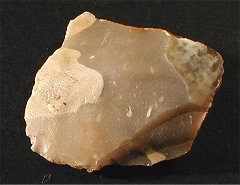
Click on this picture for
a more detailed view
PRICE: $
24.00 ITEM NO: FPS-02 |
DESCRIPTION: Hammer Stone
Click on the view number for more
detailed views (view
1,
2,
3)
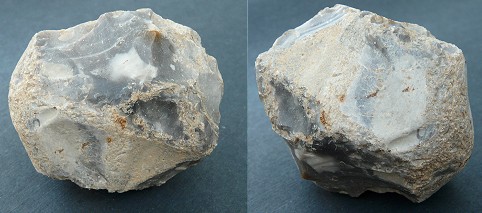
This artifact is of a fine grained gray
mottled chert, with worked edges and obvious signs of heavy use (i.e.
flint knapping, retouching, and crushing objects). It measures
80mm by 65mm by 62mm. It was discovered at a site in the
Department of Dordogne, France. This piece dates to the
Neanderthals of the Late Mousterian (MAT) - Mousterian of Acheulean Tradition, dates to about 90,000 to 40,000 B.C.
This artifact is from an old Canadian collection originally
sourced in France.
PRICE: $ 210.00 Sold
ITEM NO: FA-22 |
DESCRIPTION: Hammer Stone
Click on this picture for a more
detailed view (bottom
view)
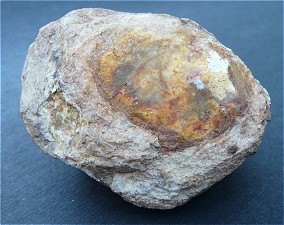 This artifact is of a medium grained mottled
chert, with obvious worked edges and signs of heavy use (i.e. crushing
objects). It measures 90mm by 70mm by 45mm. It was discovered at a site in the
Department of Dordogne, France. This piece most likely dates to the
Neanderthals of the Late Mousterian (MAT) - Mousterian of Acheulean Tradition, dates to about 90,000 to 40,000 B.C. This
artifact is from an old Canadian collection originally sourced in
France. This artifact is of a medium grained mottled
chert, with obvious worked edges and signs of heavy use (i.e. crushing
objects). It measures 90mm by 70mm by 45mm. It was discovered at a site in the
Department of Dordogne, France. This piece most likely dates to the
Neanderthals of the Late Mousterian (MAT) - Mousterian of Acheulean Tradition, dates to about 90,000 to 40,000 B.C. This
artifact is from an old Canadian collection originally sourced in
France.
PRICE: $ 195.00 Sold
ITEM NO: FA-23 |
DESCRIPTION: Bilateral Sidescraper

This artifact is a fine grained whitish chert
with two edges modified. The bulb of percussion is located on the
ventral surface (back side) on the top of this photo. The minor
retouches on the left and right edges.
The flake scars are pronounced and are arranged in a parallel manner
more common with Flake Blades.
This piece
measures 40mm by 48mm. This artifact was discovered in the Paris Basin
region of France. It dates from the Upper Paleolithic, the Aurignacian industry, about 40,000 to
27,000 B.C.
PRICE: $ 28.00 Sold
ITEM NO: FPS-18 |
|
DESCRIPTION: Typical
End Scraper
This artifact is of a very fine grained caramel colored chalcedony. It has a triangular cross section at
its proximal end. It is symmetric with respect to its flake
axis. The piece has a rounded distal end with minor retouches on
the interior, and fine retouches in the left side. It measures
53mm by 50mm at its base and 28mm at its peak. This artifact
was discovered in the Paris Basin region of France. It dates from
the Upper Paleolithic, the Aurignacian industry, about 40,000 to
27,000 B.C.

Click on this picture for
a more detailed view
PRICE: $
25.00 Sold ITEM NO: FPS-03 |
|
DESCRIPTION: Partial Cordiform Biface
Click on this picture for
a more detailed view
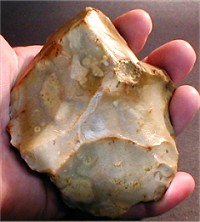 This is a large and heavy artifact that has been partially worked on both
sides. It has an elongation index of 1.32 which classifies it as cordiform instead of discoidal. it is also classified as a
"thick" biface since its flatness ratio is 2.13, which is less
than the 2.35 needed to be called a "thin" biface. This piece
has a nice old patina with a light gray mottled flint under tone and
highlights of iron oxide. There is a small amount of cortex on the
top and back edge. This artifact show signs of utilization as can
be seen on the lower left photo in the detailed view. It
measures 107mm long by 81mm at its widest. This artifact was a
field find from the historical Touraine province (located in the western
Paris Basin) of France and collected in the early 1900's. This
type of artifact dates to the Late Acheulian and Mousterian contexts
(Mousterian of Acheulean Tradition (MAT)). This is a very solid and
pleasing piece. This is a large and heavy artifact that has been partially worked on both
sides. It has an elongation index of 1.32 which classifies it as cordiform instead of discoidal. it is also classified as a
"thick" biface since its flatness ratio is 2.13, which is less
than the 2.35 needed to be called a "thin" biface. This piece
has a nice old patina with a light gray mottled flint under tone and
highlights of iron oxide. There is a small amount of cortex on the
top and back edge. This artifact show signs of utilization as can
be seen on the lower left photo in the detailed view. It
measures 107mm long by 81mm at its widest. This artifact was a
field find from the historical Touraine province (located in the western
Paris Basin) of France and collected in the early 1900's. This
type of artifact dates to the Late Acheulian and Mousterian contexts
(Mousterian of Acheulean Tradition (MAT)). This is a very solid and
pleasing piece.
PRICE: $ 166.00 Sold ITEM NO: FA-21 |
|
DESCRIPTION:
Retouched Levallois Point
It has the classic bulb of percussion and concentric
rings on the ventral surface. The distal end has been worked nicely on
both sides of the center of axis line. It is of a light gray and
tan chert. It measures 49mm in length and
36mm in width. It was discovered at a site in the Department of Dordogne, France. This piece most likely dates to the Neanderthals of
the Late Mousterian (MAT) - Mousterian of Acheulean Tradition, dates to
about 90,000 to 40,000 B.C.

Click on picture for greater detail.
PRICE: $ 60.00 Sold
ITEM NO: FPM-11 |
|
DESCRIPTION:
Denticulated Double Concave-Convex Scraper
This artifact is of a very fine grained light gray mottled chert
with cortex. This artifact show signs of utilization. This large
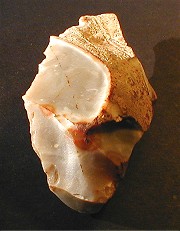 piece
measures 109mm by 53mm. It has a blunt proximal end,
with fine retouches on the upper right convex edge, and with
denticulated and some fine retouches on the left concave side. It also
possess some minor flaking on the interior surface. This artifact
was discovered in the Paris Basin region of France. It dates from
the Upper Paleolithic, the Aurignacian industry, about 40,000 to
27,000 B.C. piece
measures 109mm by 53mm. It has a blunt proximal end,
with fine retouches on the upper right convex edge, and with
denticulated and some fine retouches on the left concave side. It also
possess some minor flaking on the interior surface. This artifact
was discovered in the Paris Basin region of France. It dates from
the Upper Paleolithic, the Aurignacian industry, about 40,000 to
27,000 B.C.
Click on this picture for
a more detailed view
PRICE: $ 92.00 Sold
ITEM NO: FPP-18
|
|
DESCRIPTION: Denticulated Double
Straight Scraper
This artifact is of a very fine grained light gray mottled chert
with cortex. This artifact show signs of utilization. This large piece
measures 105mm by 65mm. It has a notch on the right side,
with some fine retouches around the major edges. It also
possess some minor flaking on the ventral surface on the distal end. This artifact
was discovered in the Paris Basin region of France. It dates from
the Upper Paleolithic, the Aurignacian industry, about 40,000 to
27,000 B.C.
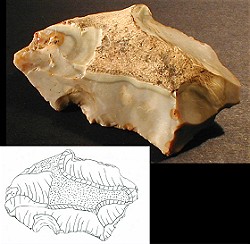
Click on this picture for
a more detailed view
PRICE: $84.00 Sold ITEM
NO: FPP-19
|
DESCRIPTION: Mousterian Denticulate Artifact
This artifact is a cream colored chert with both edges modified with a
small notch on the left side. This piece show traces of utilization
evident from the worn-down retouches. The right side has a chip
missing from possible frost damage. It measures 84mm by 44mm at
its widest. It was discovered at a site in the Department of Dordogne, France. This
piece dates to the Neanderthals of the Late Mousterian (MAT) - Mousterian of Acheulean Tradition, dates to about 90,000 to 40,000 B.C

Click on this picture for
a more detailed view
PRICE: $ 42.00 Sold ITEM NO: FPM-08 |
|
DESCRIPTION: Upper
Paleolithic End Notched piece
Click on this picture for
a more detailed view
 This
unusual artifact is of a very fine grained light gray mottled chert
with some cortex still attached. It is classified as a End Notched
piece since its notch is on the distal end. It has fine retouches
around the notch and along the right edge. It also contains some
interior retouches. This artifact measures 62mm by 60mm, and the
notch measures 33mm wide. This artifact
was discovered in the Paris Basin region of France. It dates from
the Upper Paleolithic, the Aurignacian industry, about 40,000 to
27,000 B.C. This
unusual artifact is of a very fine grained light gray mottled chert
with some cortex still attached. It is classified as a End Notched
piece since its notch is on the distal end. It has fine retouches
around the notch and along the right edge. It also contains some
interior retouches. This artifact measures 62mm by 60mm, and the
notch measures 33mm wide. This artifact
was discovered in the Paris Basin region of France. It dates from
the Upper Paleolithic, the Aurignacian industry, about 40,000 to
27,000 B.C.
PRICE: $
46.00 Sold ITEM NO: FPS-01 |
|
DESCRIPTION:
Typical End Scraper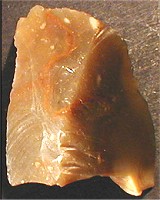
This artifact is of a very fine
grained caramel chalcedony. It is a nice clean piece, symmetric
with respect to its flake axis. The
piece has a rounded distal end with fine retouches. It measures
42mm by 36mm. The end scraper was made on a Levallois flake.
This artifact
was discovered in the Paris Basin region of France. It dates from
the Upper Paleolithic, the Aurignacian industry, about 40,000 to
27,000 B.C.
Click on this picture for a more
detailed view
PRICE: $ 23.00 Sold
ITEM NO: FPS-04 |
|
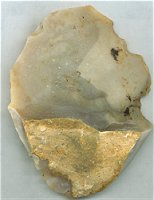 DESCRIPTION: DESCRIPTION:
Upper Paleolithic Flake Tool
This artifact is of a very fine grained light gray mottled chert
with about a third of the dorsal surface cover by cortex. It
possess a few retouches and notches around the outer edge. It measures
58mm
by 46mm. This artifact
was discovered in the Paris Basin region of France. It dates from
the Upper Paleolithic, the Aurignacian industry, about 40,000 to
27,000 B.C.
Click on this picture for
a more detailed view
PRICE: $ 32.00
Sold
ITEM NO: FPS-05 |
|
DESCRIPTION: Carinated
shaped Scraper
Click on this picture for
a more detailed view
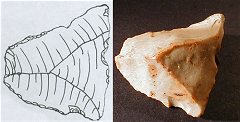 This artifact is an interesting carinated or keel shaped scraper of fine
grain tan flint with white mottling. It has some rust colored
patina especially on the high points. There are retouches on all
three sides of this piece and a small amount of cortex on the top right
corner. This scraper was produced by the Levallois flake technique.
It measures 55mm at its widest base by 52mm. This artifact
was discovered in the Paris Basin region of France. It dates from
the Upper Paleolithic, the Aurignacian industry, about 40,000 to
27,000 B.C.
This artifact is an interesting carinated or keel shaped scraper of fine
grain tan flint with white mottling. It has some rust colored
patina especially on the high points. There are retouches on all
three sides of this piece and a small amount of cortex on the top right
corner. This scraper was produced by the Levallois flake technique.
It measures 55mm at its widest base by 52mm. This artifact
was discovered in the Paris Basin region of France. It dates from
the Upper Paleolithic, the Aurignacian industry, about 40,000 to
27,000 B.C. PRICE: $ 40.00 Sold ITEM NO: FPS-07 |
DESCRIPTION:
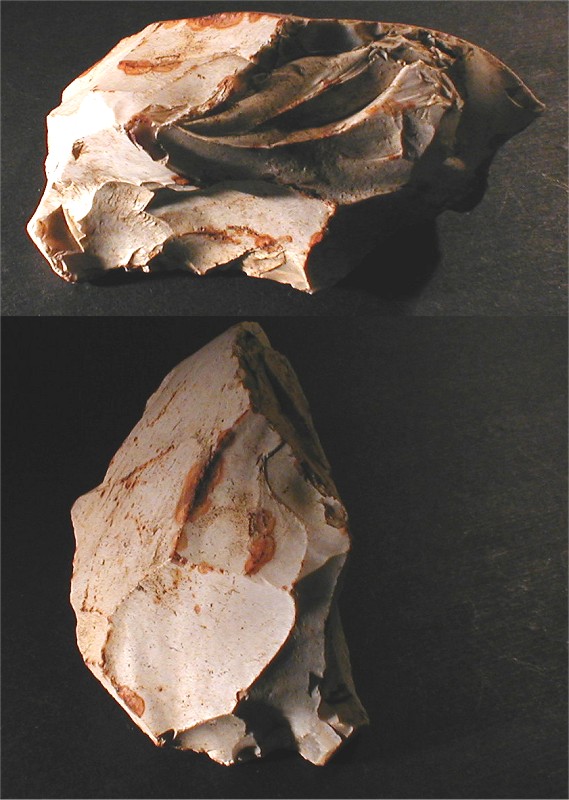
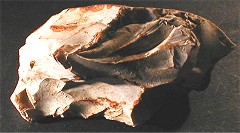
Normandy region Core (Large)
Click on this picture for
a more detailed view
This is a well used flake preparation
core from the Normandy region of France. It was only a tiny area
of cortex left on one edge. The entire surface has a wonderfully
old looking creamy white patina with highlights of iron oxide. The
base rock is a fine gain light gray chert. The top of this
artifact indicates that this piece was also used lightly as a hammer
stone as evident by the conchoidal fracturing and worn edge. It measures
91mm by 57mm by 49mm. It dates from the Neolithic period, up to 6,000 years ago. PRICE: $
58.00
Sold ITEM NO: FN-50 |
 DESCRIPTION: DESCRIPTION:
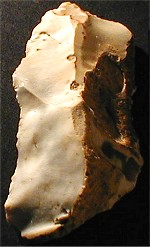
Mousterian Serrated Tool
This artifact is a cream colored chert with both edges modified. The bulb of percussion
is located on the ventral surface (back side) on the top of this
photo. The retouches are mainly on the interior surface. The
right side is covered with about one third cortex. The flake scars
are arranged on the proximal end in a manner common with and end
scrapers. It measures 70mm by 33mm. The distal end has a
small newer chip. It was discovered at a site in the
Department of Dordogne, France. This piece dates to the
Neanderthals of the Late Mousterian (MAT) - Mousterian of Acheulean Tradition, dates to about 90,000 to 40,000 B.C.
Click on this picture for
a more detailed view
PRICE: $ 66.00 Sold ITEM NO: FPM-09 |
DESCRIPTION:
Mousterian Naturally Backed Knife

Click on this picture for
a more detailed view
The definition of a naturally backed
knife is an unretouched flake or blade that has a sharp cutting edge on
one margin and a natural cortical surface on the opposing edge, Bordes(1961:33). This artifact is
made out of a flake that is a honey - cream colored chert. There
are retouches occur over the entire length of the apparent distal end of
this artifact. Some of the cortex was knocked off the proximal end
by the force of percussion when this tool was produced. It measures
70mm by 38mm and only 9mm thick! It is a very nice example of this
type of tool. It was discovered at a site in the Department of Dordogne, France. This piece dates to the Neanderthals of the Late
Mousterian (MAT) - Mousterian of Acheulean Tradition, dates to about
90,000 to 40,000 B.C.
PRICE: $ 78.00 Sold
ITEM NO: FPM-10 |
|
DESCRIPTION: Subtriangular
Unifacial Biface
Click on this picture for a more
detailed view
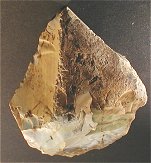 This
is an Acheulean (Paleolithic) age hand axe, measuring 102mm by 91mm by
41mm (at widest point). This artifact is a biface with a Subtriangular
aspect and is best classified as a "Unifacial Biface". The flatness
ratio is 2.22, which classifies this piece as "Thick". This artifact has
a good sharp tip. The left side edge on the dorsal surface has
serrated retouches while the right edge shows little modification.
The proximal end has been trimmed to created a round base. Ventral
surface exhibits a large bulb of percussion and some modification to the
base. This piece is considered a flake tool since it was produced
by removing a large flake from a core nodule. It was discovered in
the Dordogne Region, France. This artifact is a beautifully mottled
light gray and tan fine grain chert with a nice patina. Cortex can
be seen on right dorsal surface of this piece. This piece probably
dates from around 250,000 years old. This
is an Acheulean (Paleolithic) age hand axe, measuring 102mm by 91mm by
41mm (at widest point). This artifact is a biface with a Subtriangular
aspect and is best classified as a "Unifacial Biface". The flatness
ratio is 2.22, which classifies this piece as "Thick". This artifact has
a good sharp tip. The left side edge on the dorsal surface has
serrated retouches while the right edge shows little modification.
The proximal end has been trimmed to created a round base. Ventral
surface exhibits a large bulb of percussion and some modification to the
base. This piece is considered a flake tool since it was produced
by removing a large flake from a core nodule. It was discovered in
the Dordogne Region, France. This artifact is a beautifully mottled
light gray and tan fine grain chert with a nice patina. Cortex can
be seen on right dorsal surface of this piece. This piece probably
dates from around 250,000 years old.
PRICE: $ 200.00
Sold ITEM NO: FAP-17 |
DESCRIPTION: Denticulate
Flake Tool

Click on this picture for
a more detailed view
This artifact is made on a flake composed of a fine grained light gray
colored chalcedony with heavy cream colored patina. It has
irregular placed retouches on both interior and exterior surfaces, along
with a notch on one side. The bulb of percussion is present and is
parallel to the long axis of this piece. This piece measures 58mm by
54mm. This artifact
was discovered in the Paris Basin region of France. It dates from
the Upper Paleolithic, the Aurignacian industry, about 40,000 to
27,000 B.C.
PRICE: $ 34.00 Sold ITEM NO: FPS-08 |
|
DESCRIPTION: Upper Paleolithic Magdalenian
Blade
(Click on this picture for
a
more detailed view)
This
is an Magdalenian Blade from the Upper Paleolithic (about 19,000 to
about 9,000 yrs ago). This sharp narrow blade measuring 44mm by
13mm and is very thin, less than 4mm at its thickest point! This
artifact has a slight curve to it with some very fine retouches.
The material is a light brown flint common to the region. There is
a light coating of original sediment from the site left on the surface
of this piece. This artifact was discovered at the famous site of
La Madeleine, the name sake of the Magdalenian period, located in the Vézère
Valley, Department of Dordogne.
PRICE: $ 58.00 Sold ITEM NO:
MAG-06 |
Each artifact is unique and no two
pieces are quite the same, similar to snowflakes. So once an item is purchased,
there usually is not another artifact to replace it.
Contact us at: StoneAgeArtifacts@gmail.com
The contents of this site
under
Copyright © 2001-2026
Stone Age Artifacts
Gallery,
All Rights Reserved
Stoneageartifacts.com
Our web page does
not automatically collect specific information about
visitors.
Aggregate and summary statistics are collected only as a
measure of
our web site’s effectiveness.
|